The Art of Writing Horror Poetry: A Guide to Crafting Verse That Haunts
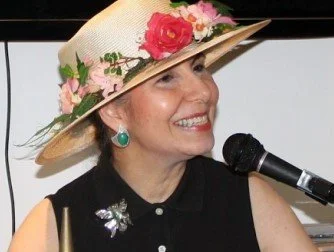
By LindaAnn LoSchiavo
Horror poetry operates in the liminal spaces where language fractures and meaning decays. It's not about shocking your reader with gore or recycling the same vampires that have stalked through a thousand derivative verses. True horror poetry disturbs because it taps into something primal—the nameless dread that lurks beneath everyday consciousness, the wrongness that can't quite be articulated.
The Architecture of Unease
The most effective horror poetry understands a fundamental truth: terror lives in suggestion, not exposition. Consider Edgar Allan Poe's "The Raven," where the bird itself becomes a manifestation of grief-induced madness. The horror isn't in the raven's presence but in what it represents—the narrator's psychological deterioration, his inability to escape loss. The poem's relentless trochaic octameter mimics obsessive thought, each "Nevermore" driving the speaker deeper into despair.
Or examine Sylvia Plath's "Lady Lazarus," where the speaker transforms personal anguish into something monstrous and mythic. The horror emerges through juxtaposition—the casual tone describing suicide attempts, the Nazi imagery colliding with resurrection mythology. Plath doesn't explain the horror; she embodies it in language that feels both confessional and threatening.
The lesson? Your poem's form should amplify its content. If you're writing about fragmentation, let the structure fracture. If you're exploring obsession, let repetition become claustrophobic. Make the reader feel trapped inside the poem's architecture.
Sensory Immersion and Strategic Ambiguity
Horror poetry demands engagement with all senses, but deployed strategically. Don't catalog sensations—select the details that unsettle. In "The Sick Rose" by William Blake, the "invisible worm / That flies in the night / In the howling storm" creates dread through what remains unseen. The worm's "dark secret love" that "destroys" the rose's life becomes more disturbing for its vagueness. Is this about disease? Corruption? Sexual violence? Blake refuses to clarify, and the ambiguity amplifies the horror.
Your word choices should create cognitive dissonance. Instead of describing a forest as merely dark, make it "bone-quiet," "lung-thick with fog," or "breathing between the trees." Replace passive verbs with active menace—shadows don't fall, they crawl; silence doesn't settle, it waits. These choices activate your reader's threat-detection instincts without explicitly stating danger.
Escaping the Crypt of Cliché
Yes, vampires and werewolves have been done to death (and undeath). But the solution isn't necessarily abandoning these archetypes—it's finding what made them frightening before they became domesticated. Vampirism works as metaphor for parasitic relationships, for the loss of self, for predatory seduction. Lycanthropy speaks to the violence we contain, the animal self we barely control.
Better still, excavate your personal terrors. The most visceral horror often comes from childhood—those half-understood threats, the places you wouldn't go, the things that watched from closets. Give these formless dreads a voice, but resist explaining them away. In Christina Rossetti's "Goblin Market," the goblins themselves remain deliciously ambiguous—are they demons? Manifestations of forbidden desire? Predators exploiting women's hunger? Rossetti never clarifies, and the poem retains its disturbing power.
Form as a Weapon
Horror poetry thrives when structure reinforces atmosphere. Consider how T.S. Eliot's "The Waste Land" uses fragmentation—shifting voices, broken narratives, abrupt tonal shifts—to create a landscape of spiritual desolation. The form itself becomes disorienting, forcing readers to experience the poem's existential dread rather than simply read about it.
Or examine the prose poetry of Charles Baudelaire's "The Flowers of Evil," where the absence of traditional line breaks creates a claustrophobic density. The form mirrors urban suffocation, moral decay compressed into airless paragraphs. Meanwhile, the tight rhyme schemes of Poe's work create an almost obsessive-compulsive quality—everything locked into place, no escape possible.
Your poem's shape matters. Couplets can create relentless forward momentum, terror building with nowhere to pause. Longer stanzas can become labyrinthine, readers lost in syntax. Irregular forms can mirror psychological fracture. Match your architecture to your dread.
The Unseen and the Unsaid
Gore has its place, but psychological horror cuts deeper. In Louise Glück's "The Wild Iris," death and resurrection create existential unease through restraint—flowers speak of oblivion with devastating calm. The horror isn't in violence but in the recognition of consciousness facing annihilation, then returning, then facing it again in an endless cycle.
Your most powerful tool is implication. What you don't show often disturbs more than what you do. End on ambiguity. Let your final image raise questions rather than answer them. Make your reader complicit in the horror by forcing their imagination to complete what you've suggested.
Finding Your Voice in the Darkness
Study the masters—Poe's Gothic excess, Plath's confessional rage, Blake's mystical dread, Baudelaire's corrupt beauty—but don't imitate them. Discover what genuinely unsettles you, then find language that embodies that unease rather than merely describing it.
Write without self-censorship in early drafts. Let the poem become stranger than you intended. Horror thrives in the unconscious, in the images that emerge unbidden. You can refine later—first, you must let the darkness speak through you.
Horror poetry is an invitation into nightmare. Your reader extends their hand, trusting you to guide them through shadows. Honor that trust by taking them somewhere genuinely disturbing, somewhere that lingers after the poem ends. Once you've led them into darkness, the most powerful thing you can do is leave them there, alone, with only their thoughts and the echo of your words.
ABOUT LINDAANN:
Native New Yorker LindaAnn LoSchiavo, an award-winning member of the British Fantasy Society, HWA, SFPA, and The Dramatists Guild, was inspired by Stoker early on and became "A Handmaiden to the Dark Side" (her title for Marge Simon's Blood and Spades column, HWA Newsletter, September 2020). In 2023, she joined Bram Stoker Award winners Linda Addison and Angela Yuriko Smith for a Stoker-birthday reading titled "The Brides of Bram."
Through the lens of horror, LoSchiavo has reimagined social justice in two Halloween poetry collections, has transformed Cancer into a Terminator-Casanova in Cancer Courts My Mother (Prolific Pulse Press, 2025), and has blended pop culture with dark humor to create a fresh perspective on the undead in Vampire Verses: Poems (Twisted Dreams Press, 2025).
Her book awards in 2025 include the Chrysalis BREW Project’s Seal of Excellence and the Voyages in Verses Book Award for Cancer Courts My Mother; and the Excellence in Literature Award and The Bookish Reader's Pick Award for Vampire Verses: Poems.