
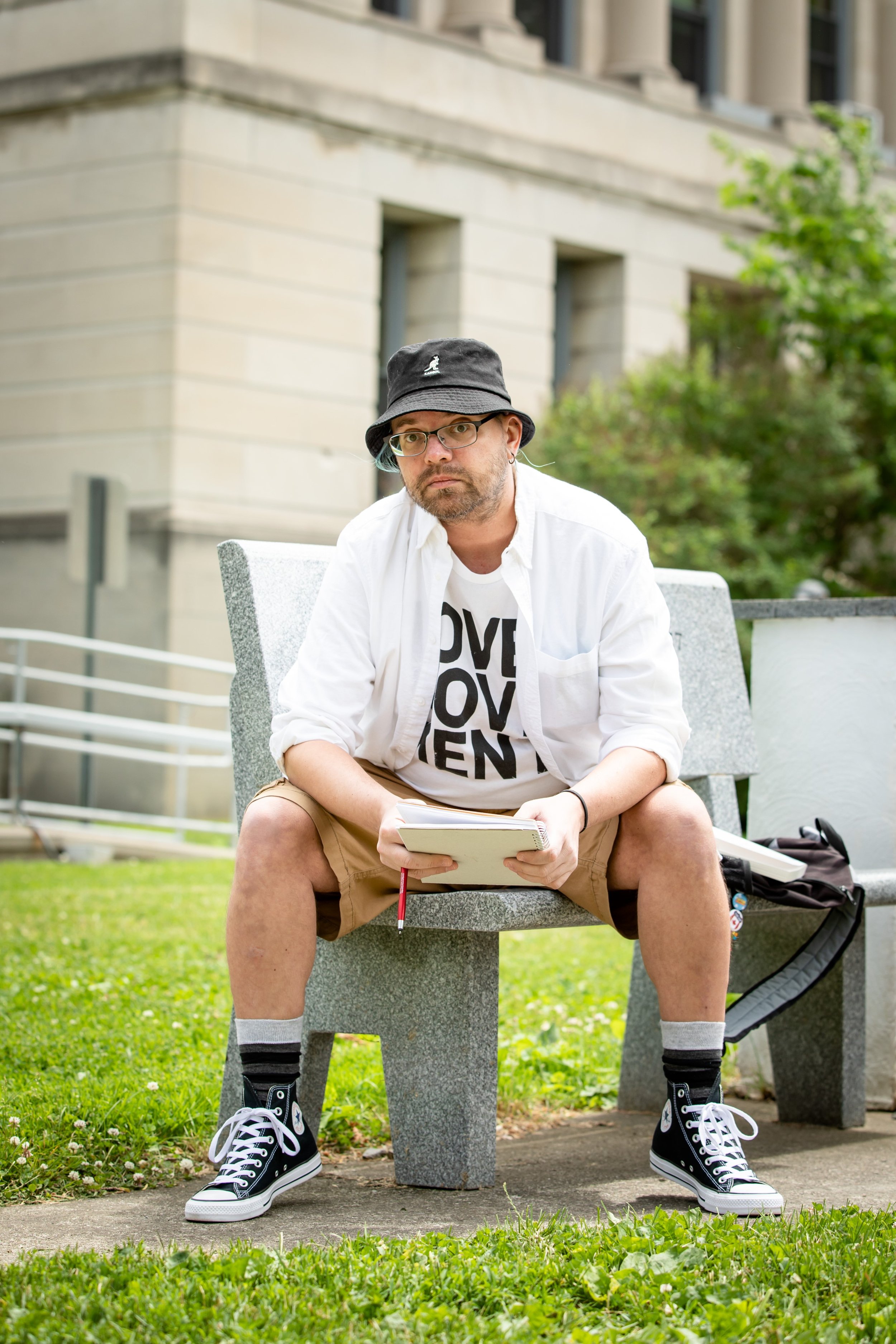
Self-Publisher Interview with Norb Aikin
1. What can you tell me about your experience as a writer?
So much, right? From starting out in high school writing down feelings I couldn’t articulate, to spending years honing my work, to a chance post on Twitter, to being published by a small indie press, to self-publishing, to having my poems studied in high school English classes … it’s been a wild and wildly fulfilling journey. I feel like I’ve had the highs and lows many of us have experienced along the way, and it’s taught me many things while encountering some amazing people along the way.
2. What made you decide to write a book?
I think, for a good number of us, we don’t start with the end product being an actual book. I started out writing in notebooks, pre-internet, by hand, and I still do it that way. Years ago on Twitter, I started following mental health accounts just for information I could use to fill in the gaps of what I knew and didn’t, to sort of supplement my own encounters with therapists and doctors regarding my own MH struggles. And that’s where I came across an author who wrote manuals and published anthologies based on MH essays and stories. She was starting an imprint, so I asked if she’d accept poetry. I’d already had the manuscripts for what would be my first two books almost ready to go but had never thought about publishing. She asked me to send a query letter with a couple poems, and she accepted them and me as a poet. It became one of those things where once you get a taste of it, you want more of it. From then on, I knew I was always gonna be an author no matter what, so why not continue?
3. What circumstances brought you to the decision to self-publish your book?
My first book was warmly received, so I decided to put out a chapbook as a teaser to my next collection with poems from that forthcoming book along with other things I’d worked on in the interim. Sent it off to my publisher, and the proof came back with some formatting errors, so she sent it back to the editor. Now, being an indie press, nothing is guaranteed. In the process of waiting for the edits, the press unfortunately went under. I made the choice then to self-publish through Amazon. Instead of being a chapbook, I beefed it up with interviews I did for my first book, along with MH essays I’d written for sites like Stigma Fighters and The Mighty. It was a decision I’d make 10 times out of 10.
4. What has your experience as a self-publisher been like?
Trial and error. I knew I had people I could ask for help and advice, but mainly I wanted to do most of the work myself as far as editing and formatting. I was teaching myself how to do it, and learning from people who had been there/done that. It was eye-opening, but I was determined. There were bumps in the road, of course, but by the time I was finally ready to submit it I had accumulated so much knowledge that I felt comfortable going that route again if necessary. By the time my third book came out, it was so much easier to do it.
5. How do you respond to the negative stigma attached to self-publishing and self-published books?
I pay it no mind. I look at Amazon as this big company, this big table, and self-publishing is one of the legs holding it up. Maybe it’s not a big leg, and the corporation could survive without us, but we matter to the extent of it’s their platform and they’re giving us a chance to say whatever we wanna say. If anyone wants to criticize that, it’s their right, but why should I let it bother me? I look at people who say this or that about self-pubbed books, and I ask myself how many books they’ve written that were accepted by any publisher. I think it says more about the person perpetrating the stigma than it says anything about me.
6. What is one very important lesson you have learned as a self-publisher so far?
That EVERYTHING is on you once you’ve hit the submit button. You’re the marketer, the promoter, the ad designer, etc. You control its reach. There’s no one backing you except the people who enjoy your work. Word of mouth is your biggest friend.
7. What do you know now about self-publishing that you wish you knew at the beginning?
Good question! There are so many things, but one thing that sticks out to me is don’t say “no” much. I did that once, shortly after World By Design came out. A fellow author I’d just met asked me to do his podcast once, and I just wasn’t feelin’ it; I think I was just exhausted mentally from the publishing process and needed a break. That guy’s podcast has grown tremendously since, to where he’s interviewed people way more important than me! If I’d had that interview in my back pocket to help with marketing, who knows how many more books I may have sold?
8. A lot of authors of self-published books have reservations about promoting and marketing their book. Some even feel that it is a form of vanity or self-importance. What is your opinion about this?
I’d tell them to get over themselves. It’s part of the gig. Like I said, there’s no one behind you doing some of the heavy lifting. If you’re lucky, you have people willing to signal-boost, but books don’t always just sell themselves, right? Do the interviews and post them. Read other authors and review them … and share that on your socials! Promoting and marketing is essential to getting sales. And share the reviews you get! Be proud of your work. If you can’t do the basics, don’t complain that your book isn’t selling the way you think it should.
9. How do you promote your books and what form of book promotion has worked the best for you?
Social media is a must. Full stop. And word of mouth, like I mentioned earlier. If someone reposts your book posts, repost theirs. I know I get lazy about it sometimes, but it’s a big asset. Marketing can feel like screaming into the void sometimes, but there’s always a chance that someone reposts you and it gets in front of someone’s eyes who isn’t familiar with you but deems your book worthy enough to read. I also have a girlfriend who is a marketing genius and social media ad guru, and she’s a very successful author in her own right. She’s been a big help, and I would recommend her book marketing and tutoring services to everyone (shameless plug, JG MacLeod!!).
10. What are some other important things you have learned as a self-publisher?
Don’t be afraid to lean on others, especially if you have questions or concerns. Develop your network. Shoutout other indie authors and support them, because we’re the hungry ones. It’s not a competition.
11. Do you feel that self-publishing is a viable choice for other authors?
Absolutely. Don’t stop querying, and don’t let rejections get you down. While it only takes one publisher to vibe with your work, denials don’t need to define you. Going the self-pub route doesn’t mean you need to stay there, but it will get your work in front of others nonetheless. My third book, World By Design, has been my most popular to date. I’m incredibly proud of it, and it being self-published hasn’t diminished any aspect of it. In the end, it’s the words and content inside the book that matters, and the right people will find it.
12. How do you feel that self-publishing their books has helped many unknown authors finally get the recognition their books deserve?
It’s inspiring!! Most of the books I buy now are self-pubbed or indie. And not surprisingly, most are excellent. I love seeing these people get their flowers. It tells me that there’s a live market out there for all of us.
ABOUT NORB:
Norb Aikin is a poet and blogger originally from Buffalo, NY and now living in Cortland. World By Design is his third book of poetry, after 100 and Mutants. He’s a staunch supporter of the Writing Community on X (@aikinnorb), Instagram (@fivesixer), and Bluesky (@norbaikin.bsky.social). He’s written for Stigma Fighters, Medium, The Mighty, and Fevers Of The Mind. Stay kind, and go Bills!!