
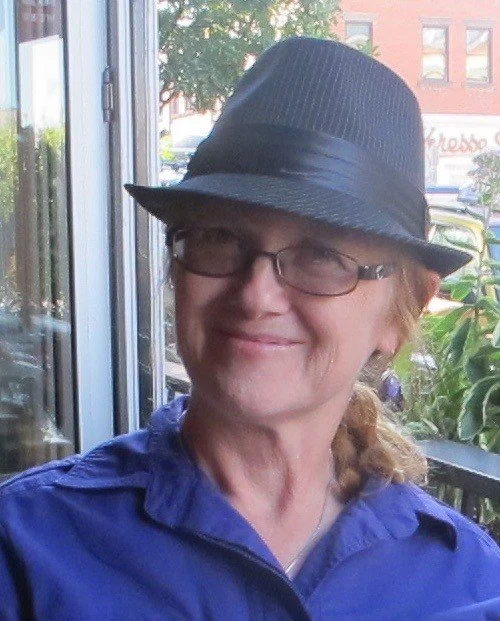
Self-Publisher Interview with Joyce
Reynolds-Ward
1. What can you tell me about your experience as a writer?
I have been writing off and on for most of my life, starting with writing and submitting work to science fiction magazines when I was in high school. Alas, I didn’t sell anything then. I sold a couple of short stories in the 90s, but had more luck placing work in Portland ‘zines and periodicals during that era, doing more journalism and what is now called “creative nonfiction” than fiction. I stopped writing for a while, except for a column in the Portland State Vanguard when I was going to grad school to get my special education teaching certificate. Then I got swept up in teaching work until one day I went into my room, looked at my desk piled high with special education reports I had to write (pretty much technical writing), and said “I want to write fiction again.”
So I did. I’ve sold nearly 30 short stories to assorted markets, and earned a SemiFinalist placement in one of the Writers of the Future quarterly competitions. Then I started submitting my books to traditional publishing, at about the time that self-publishing became feasible. At that point, I moved my book writing over to self-publishing rather than continue to submit work, especially since I had traditionally published writer friends who were starting to run into problems with their series being cancelled, or having to adopt multiple pseudonyms because they wrote across different genres. They all fell into what is called the “midlist”—the non-blockbuster books—and I realized that I wanted to have more control over my work.
I started self-publishing books in 2011. In 2019, a New York Times best-selling author that I workshopped with advised me to try traditional publishing again with a big book. Well, I had a book ready to go, and … sigh. COVID happened. And that big book turned into a quartet (The Martiniere Legacy Quartet) that led to three spinoff series. But I’ve also written a fantasy series, a cyberpunk skiing space exploration series, and several standalones since then.
2. What made you decide to write a book?
I’ve always wanted to tell stories, and started writing books when I was a little kid. I wanted to see people like me—i.e., women—in assorted roles that I didn’t see when I was growing up in the 60s and 70s.
3. What circumstances brought you to the decision to self-publish your book?
Experiences with traditional publishing made me realize that while I write well and can tell a good story, the stories I want to tell are considered to be niche and don’t necessarily fit in a traditional publisher’s line. I like to use Pacific Northwest-type settings in science fiction and fantasy, and I combine unusual things—like cyberpunk and skiing, agricultural technology and mind control technology, fantasy that’s set in a somewhat Pacific Northwest location without castles or traditional European-type structures, and so on. There’s more of that now, but twelve, fifteen years ago? Not so common.
4. What has your experience as a self-publisher been like?
Pretty decent overall. Because of my past experience and connections with people in traditional publishing, I’ve mostly been able to avoid scammers. Not completely, unfortunately! Let me just say this: the Writer Beware blog is your best friend, both for self-publishing and traditional publishing.
It doesn’t hurt that I also have the experience of working as a complex securities litigation paralegal, and developed an awareness of what most of the red flags could be. But … a lot of it depends on networking and connections, even in self-publishing. It helps to be able to do a check-in with others about “is this a red flag? Is this legitimate or not?”
But for me, one of the joys of self-publishing (and sometimes a nightmare, to be honest) is the ability to take control of the whole process, from first draft to release. I can look at my books and be proud that I have turned out 32 works that some people like to read. Any success or failure is squarely on my own shoulders. That’s a big deal for me, and a huge part of the reward for my work.
5. How do you respond to the negative stigma attached to self-publishing and self-published books?
I feel that this stigma is becoming less common these days. Otherwise, I just ignore it. The reality is that traditional publishing puts out bad books with less-than-perfect writing and less-than-perfect editing, too. I have spoken publicly about the business of self-publishing, and, frankly, traditionally published writers need to know about publishing business, as well as self-published writers.
Truth is, the same people who turn their noses up at self-publishing are just as likely to be scornful of commercial genres as well. You’re never going to get completely away from the haters! Plus, there are genres such as romance and mystery that are becoming more and more dominated by self-publishing, as opposed to traditional publishing.
For me, the best response is to turn out the best book that I can write and produce. I’m still learning.
6. What is one very important lesson you have learned as a self-publisher so far?
Always remain flexible and ready to pivot. ALWAYS. And that will look different from one year to the next. What is best practice in one financial quarter may not be best practice in the next quarter. Keep track of your sales data, and keep one eye on trends, not just in what’s popular with readers but what’s happening with covers and publishing formats. Watch what’s happening with distributors, and if something promising and new comes along that’s legitimate—for example, the brief rise of Amazon’s Kindle Vella—jump on it early if you can. If it succeeds, then great! If not, get out before you lose much money. There are lots of little things like Vella that may last for a year or two, but keep an eye on how it’s going because often such ventures may not be lasting. Knowing when to move on is crucial.
7. What do you know now about self-publishing that you wish you knew at the beginning?
I wish I had focused more on building my newsletter and developing my website earlier than I did. That’s a foundation for promotion, and I didn’t spend enough time early on trying to learn about promotion—though I did learn very quickly that Kindle Unlimited was not my market. Not that I was thrilled about KU—I don’t like being tied down to one distributor.
8. A lot of authors of self-published books have reservations about promoting and marketing their book. Some even feel that it is a form of vanity or self-importance. What is your opinion about this?
I’ll be the first to say that I’m a poor marketer. Promotion is a necessary evil. I don’t have reservations about it, but I also don’t want to throw bales of money at advertising. In my opinion, if you spend $9000 to earn $10,000, was it worth it? Did you actually earn anything once you take out the expenses of editing, covers, and possibly audiobook production?
For me, it’s a matter of taking the time to do marketing and promotion when I’d much rather be writing. Paid advertising requires a lot of expense and A/B testing, and … I just don’t have the patience or the desire to throw that kind of money at advertising. Especially when I see publicists for traditional publishing openly admit that they don’t always know what does and doesn’t work for book sales.
I like to hope I’m getting better, but … I don’t know.
9. How do you promote your books and what form of book promotion has worked the best for you?
I currently do most of my promotion on social media. Every time I look at the prices for BookBub, Amazon, or Facebook ads, I choke because I don’t have the confidence that it will pay off. I make promo slides on BookBrush and run my sales links through book landing pages on my website.
Right now, what’s working best for me is participating in bundles on Itch. I’m getting ready to launch a Patreon sometime this summer where I will most likely be serializing some of my projects. Once I wrap up getting my books relisted with distributors after leaving Draft2Digital, I’ll have time to focus on that project.
I’m also putting out themed samplers of my work—corporate weirdness, western, relationships, and dysfunctional families. They’re available through BookFunnel, in the Joyce’s Books section of my Substack, or through links in the onboarding sequence for my newsletter. I’m also planning to distribute those samplers locally in print form. I may add those links to my website, but that’s a work in progress.
10. What are some other important things you have learned as a self-publisher?
I’ve developed multiple software skills including a little bit about graphic design, working with formatting programs, and word processing. And, despite my claims that I’m a poor marketer, I’ve learned more about marketing—and I’ve learned how to create booklets easily.
11. Do you feel that self-publishing is a viable choice for other authors?
It really depends on a person’s goals and the degree to which you are seeking self-validation, as well as your ability to run a small business.
Self-publishing requires an author to be able to step back from the creative side of their work and look at the business side—following trends, keeping tabs on what is happening with publishing overall, managing your financials, plus figuring out what you can do yourself and what would be best off delegated to someone else.
There is no one good answer that covers every situation because each person brings different competencies and varying comfort levels with the many aspects of publishing work to the business. How much time are you willing to put into learning about book production? Marketing? Graphics? How much money and time are you willing to invest in this business?
I spend a bit of time reading books about publishing, not only current day but publishing history. It’s useful to read Anthony Trollope’s books that talk about publishing, for example, because while aspects of the industry were different in his day, there are aspects that I believe we are hearkening back to (deep breath, I need to start looking up Charles Dickens as well). Publishing is a significant subthread in Trollope’s The Way We Live Now, especially since he bases a lot of it not just on his experience as a writer but his mother’s experience. Or read about the Brontës—not just their family drama but the mechanics of their publishing. Or Louisa May Alcott. All of these writers provide a useful perspective for the modern self-published writer, because, well—serials are coming back into play. To some extent writers before the 20th Century published their own work.
I think being willing to do this sort of reading is absolutely crucial for a self-published writer, even more so than for a traditionally published writer.
But the validation piece is just as important as the managing a small business piece. Both traditional publishing and self-publishing are a long game. With traditional publishing, the process of being accepted and paid for your work helps one feel validated. Self-publishing doesn’t necessarily have that particular reward. There are days when the sales dashboards don’t show any movement. Or the reviews suck. There are times when you can feel like an outsider because you are less likely to win major awards in your genre of choice. On the other hand, once you develop followers and fans, that is its own reward. When you are tabling at an event and someone makes a beeline for your table to buy a new book, that’s great.
You have to decide to what degree you are comfortable with managing a small business and how much you desire validation before you make your decision as to whether self-publishing is for you or not.
12. How do you feel that self-publishing their books has helped many unknown authors finally get the recognition their books deserve?
That’s a tough question, in part because I want to refer back to the validation piece I brought up in the previous question. I think it helps for an author to be realistic about recognition. Traditional publishing doesn’t always gain recognition for a writer’s work! Self-publishing can feel like a lot of work for little reward at times.
But I strongly believe that self-publishing works well for writers who don’t necessarily fit the mold of traditional publishing. The reality is that even back in 2012, it was becoming clear that competent, excellent writers who hadn’t broken out of the midlist but who had followings were slowly being eased out of traditional publishing. I think back to one science fiction panel featuring a big New York editor that I attended with a group of my friends, all of us middle-aged women, some of us traditionally published, some of us self-published. It became clear as the editor spoke that we were not the writers that this editor was looking for—and it had nothing to do with the quality of our work, or our ideas. This person was looking for sparkling debut writers—a trend that is noted now, but was less-common then. We all walked out of that panel with the comment that “New York doesn’t want us.”
Despite the claims that reading just isn’t popular these days, I have to wonder. I occasionally drop into a Classic Literature group on Tumblr and see a lot of excitement and energy about books from younger readers. Self-publishing provides an opening for many niche books that traditional publishing would overlook—and I think that is important, in the long run.
ABOUT JOYCE:
Joyce Reynolds-Ward has been called “the best writer I’ve never heard of” by one reviewer. She has published over 32 books that include themes of high-stakes family, corporate, and political conflict, digital sapience, personal agency, realistic strong women, and (whenever possible) horses, frequently in Pacific Northwest settings.
She is the author of six speculative fiction series: The Netwalk Sequence, Goddess's Honor, The Martiniere Legacy Quartet, The People of the Martiniere Legacy, The Martiniere Multiverse, and The Cost of Power, as well as standalones Vision of Alliance, Federation Cowboy, Beating the Apocalypse, Klone's Stronghold: Reeni and Alien Savvy.
Joyce is a Self-Published Fantasy Blog-Off Semifinalist, a Writers of the Future SemiFinalist, and an Anthology Builder Finalist. She is a member of the Science Fiction and Fantasy Writers Association, co-chair of SFWA’s Independent Author Committee, and a member of Soroptimists International.
Social media links:
Bluesky: @joycereynoldsward.bsky.social