
Self-Publisher Interview
with G. Lawrence
1. What can you tell me about your experience as a writer?
I don't really know what to say to this, other than it's the only job I've ever really, truly loved and I'll be a writer until the day I die.
2. What made you decide to write a book?
I always loved reading, and at some stage, decided I had something to add to the world of literature. Mine might always remain a small contribution, but still, I took a step into that world and made myself part of it. I'll always be proud of that.
3. What circumstances brought you to the decision to self-publish your book?
I tried one round of sending my first book off to agents and although I got positive comments about the quality of my writing, I generally was turned down. One even told me there was no point writing historical fiction about the Tudors because Phillipa Gregory had "done" the Tudors.
Feeling rather discouraged, I talked to another writer, Terry Tyler, who at that point was a friend on social media (we met in real life much later) who had been very encouraging about my work. She told me I should just go ahead and self-publish, allowing the readers to make up their minds about my books. I did, and my books proved popular, popular enough that a couple of years later I left my full-time job and became a full-time author.
The lesson is, book agents don't always know everything about the reading public.
4. What has your experience as a self-publisher been like?
I prefer the freedom of self-publishing, of being an indie, but there are admittedly ups and downs. You have to take on all roles yourself, so you're the writer, at least partially an editor, and proofreader (although I have an excellent proofreader in Julia Gibbs, who checks my final drafts) as well as often being your own accountant, manager and promoter. I think many indies, including myself, struggle with promoting our books, in particular. Writers, fairly often, are more introverted than extroverted and therefore the promotions side can be taxing.
5. How do you respond to the negative stigma attached to self-publishing and self-published books?
Generally, I remind such people that the Brontes, Beatrix Potter, Hugh Howey, Amanda Hocking, Rupi Kaur and Andy Weir were all self-published originally.
Snobbery of this sort is ridiculous and it is dying out, I'm happy to say. When I first started out, it was much more prevalent.
6. What is one very important lesson you have learned as a self-publisher so far?
Write the books you want to read, and write every day, even if only a paragraph. Writing becomes like muscle memory if you work at it, the words flow better.
And read. You have to read in order to write. That is essential.
7. What do you know now about self-publishing that you wish you knew at the beginning?
Nothing.
If I knew all the twists and turns and complications, I never would have gone ahead. I would have become paralysed by feelings of my own ineptitude. I'm glad I just took a plunge and found my way by swimming the crazy river of self-publishing. I figured out, and still figure out, problems along the way, enjoy the highs, and mourn the lows. If I knew everything that was coming when I started out, it wouldn't have been half the adventure it has been.
8. A lot of authors of self-published books have reservations about promoting and marketing their book. Some even feel that it is a form of vanity or self-importance. What is your opinion about this?
As I said before, I think that comes from the fact most writers are more introverts than extroverts. It's not always true of course, but I think writing as a career calls to those who have deep inner worlds within them, and perhaps struggle to reveal them to others through other channels.
As for it being self-important or a form of vanity, that's silly really, and most impractical. Writers have to eat and pay bills, support family and buy clothes or shoes, just like anyone else. If we don't promote our books, no one will read them, which is a shame by itself, but it also means writers cannot live on writing alone.
Writers need to be paid firstly so they can survive, but secondly, so they can go on writing, adding to the wondrous world of the arts, something which is deeply important to the human race.
9. How do you promote your books and what form of book promotion has worked the best for you?
Mainly I use social media but I've done promotions with FreeBooksy too.
10. What are some other important things you have learned as a self-publisher?
It might be easier to ask what I haven't learned. The list is too extensive to go through!
11. Do you feel that self-publishing is a viable choice for other authors?
Absolutely. Without independent authors, the literary world would be a very dull place.
12. Do you feel that self-publishing their books has helped many unknown authors finally get the recognition their books deserve?
In some regards. Andy Weir started out as a self-published author and obviously is a well-recognised name, deservedly so, now, and there are others who have done very well. So, there are grand success stories out there, but I read a lot of indie books and quite often find myself thinking those authors haven't had the recognition they deserve.
In all honesty, though, most indies aren't seeking fame and fortune. Whilst it would be nice in some ways, it's not the best reward.
What most indies live for is the moment someone tells them that their book meant something to them. That's an astonishing, awe-inspiring moment, to know you touched someone with your writing. That's why most writers write, to forge a connection between people, through books.
ABOUT G. LAWRENCE:
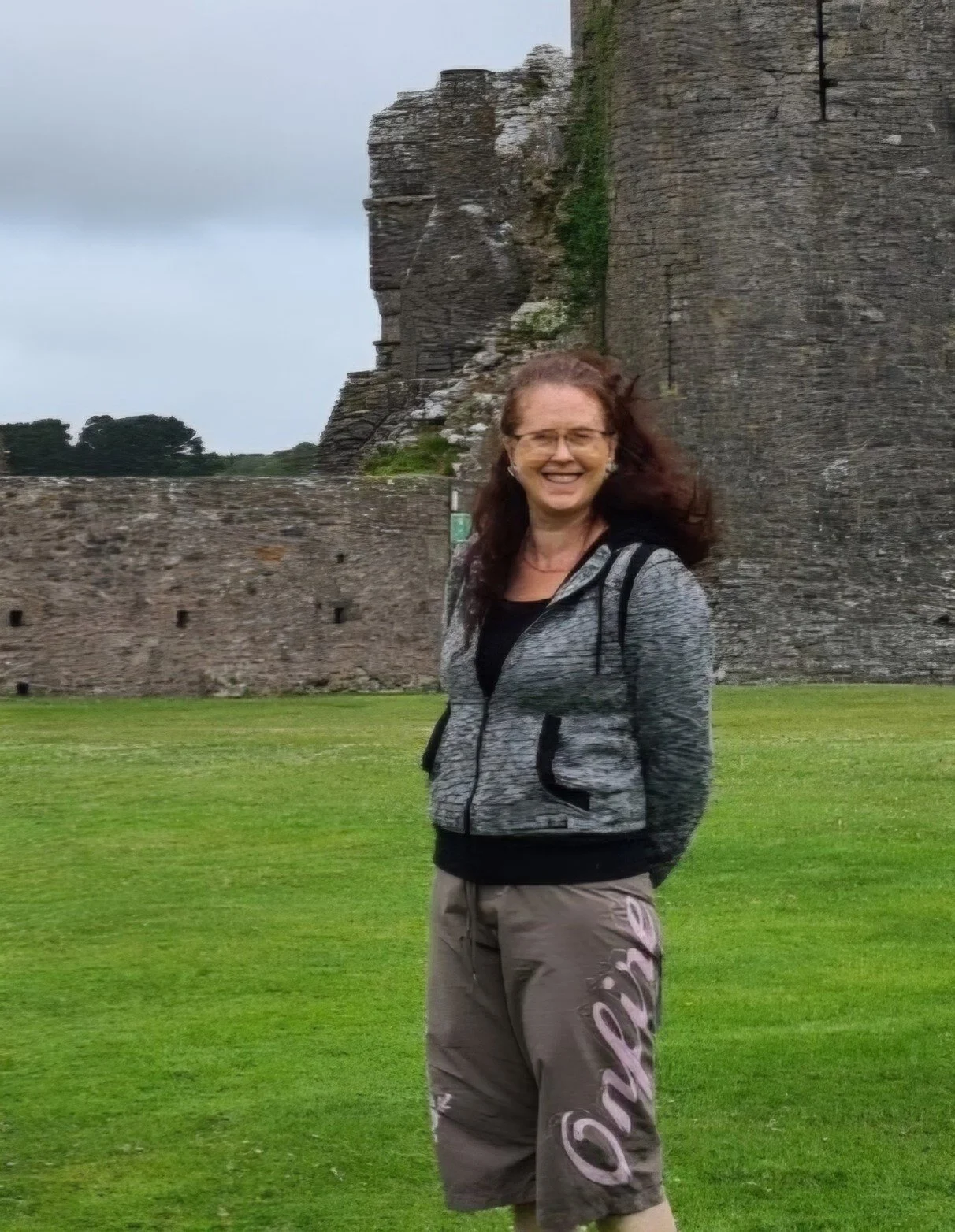
“I am an independently published author, and proud to be so. Living in a little cottage in Wales in the UK, I love where I live as much as I love to write.
The age of the Tudors has been an obsession for me since I was a child, and many of my upcoming books will centre on that time, but I also pen the odd dystopian fiction or historical fiction from other time periods. I will be releasing all my titles on amazon, for kindle, paper and hard back, and soon to come, audio books!
I studied Literature (with a capital L) at University and usually have twenty or more books I'm currently reading. Reading and writing are about mood for me, and I haven't found a genre I didn't enjoy something about so far...
I can often be found on social media, sharing my books and any interesting historical site I have managed to find that week, so come find me if that’s what you like to see!”