
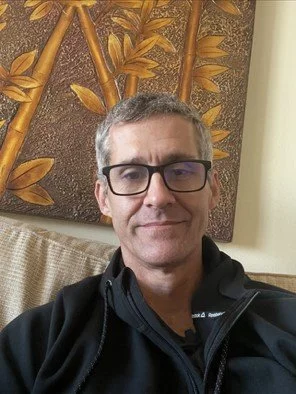
Interview with Writer Todd Zack
1. How did you get started writing fiction?
I started drawing cartoon strips when I was nine. I loved the Sunday comic pages, which came with most newspapers when I was a kid. The comic 'Bloom County' by Berke Breathed was a big influence on me at the time. I graduated to short story writing around twelve or so, just penning tiny vignettes and things. I was reading a lot of Stephen King and Piers Anthony at that age. I wrote my first novella in high school, tenth grade, I think. This story was, as far as I can remember, a less than cheery tale about insanity-inducing pesticides in the national food supply.
2. What kind of fiction do you enjoy writing? (Such as fantasy, romance, horror, or unspecified)
Most everything I do now has a strong psychological-thriller element to it, though the launching pad will often be some other genre--horror, or sci-fi, or mystery. I have a soft spot for the plausibly supernatural, which, in my way of thinking, includes psychism, spellcasting, and demonism, but excludes aliens, levitation, and shapeshifting. It's a matter of taste, really, but one's world-building, however one imagines it, needs to be logically consistent.
3. What was it about writing short stories that just seemed to "click" with your writing career?
Short stories got me started in publishing. Short stories are a great vehicle for ideas, whereas novels are focused, in the scheme of things, on characters. I first published in horror anthologies, then crime anthologies, then, after that, some of the more literary journals. Anthologies and journals are a great place to air out your ideas, to see what works and what doesn’t work and why. I’ve always been a fan of short stories and short fiction collections. My favorite short story writers are Ray Bradbury, JG Ballard, Bruce Jones, Thomas Ligotti and Gene Wolfe. I also loved the collection, Blue World by Robert R. McCammon.
4. Is there a type of short story that you enjoy writing most? Please explain.
Well, I love Cryptids, going back to Channel 56, though I’ve only written a couple of stories featuring monsters. This goes back to my ‘plausibly supernatural rule.’ I have an idea for a story that concerns this guy who’s hired by vampires as a blood donor– so they don’t have to murder people they can just get their feedings from a volunteer. Somehow the volunteer bloodletting guy ends up serving vampires in the East L.A. area. Suddenly, he’s donating blood to crips and crips to bloods and the story just becomes outrageously Machiavellian, like something Pynchon might cook up in the 70s. I probably won’t write that story, actually, because it violates my plausibility rule in so many ways.
5. What was it like when you sold your first short story?
I was thrilled! I’m still equally excited when a publisher takes an interest in a short story of mine. Incidentally, I would like to put out a collection of short stories someday, but I don’t think I have enough really good ones yet. I might be half way there.
6. Where do you find short story markets to submit to?
Dark Markets (now defunct), The Horror Tree, Submittable, Literarium, just browsing around social media, indie press open calls.
7. What is one lesson you have learned as a writer when it comes to writing short fiction?
Titles are important. Titles are as important as the story itself. This might sound like an exaggeration, but it’s true. When another writer asks me, “Can you tell me what’s wrong with my story?” I say, “Sure. Change the title.” If the title is no good, I won’t even read the story. Bad titles are lazy writing, right from the get go. Bad advertisement. I’m guilty of this too, by the way.
8. How is writing short fiction different from your work as a writer of longer fiction?
I can dip in and out of them whenever I want. Novels are a long haul, and they require a lot of time, dedication, and focus. If a short story sinks, it’s not a huge failure, and you move on to another; if it soars, however, you’re completely psyched. A writer can catch ‘lightning in a bottle’ with a short story often enough, whereas long-form writing is a very methodical, calculated, grinding away sort of thing.
9. What is some of the best advice you have received from other writers or editors when it comes to writing short fiction?
An editor from Nightmares Magazine (no longer in print) used to absolutely destroy my work, not publicly of course, but in our personal communications. Then he’d throw me a little bone here and there, something like, “This was an incredible idea, poorly executed.” Ruthless dude, but not in the least bit mean-spirited. He did more for me as a writer than anyone, because, up to that point, I’d always heard “you’re a good writer,” never “you’re not such a good writer and here’s why…” Harsh, honest criticism is very good for a writer.
10. Do you have any advice of your own to share with other writers?
Keep writing, and read a lot. Read in and out of your sweet spots too. Place subjects, locations, and things in your writing that you have knowledge of and interest in. These subjects, locations, and things will have an ‘Easter Egg’ effect on your reader. Interested people make interesting writers.
ABOUT TODD:
Todd Zack is a social worker, writer and a musician living in southwest Florida. His short fiction has been twice nominated for the Pushcart Prize. He is the author of the novel Madeline's Cane (Baynam Books Press) and the novellas Night of the Star Demon (Baynam Books Press) and Food for the Moon –forthcoming from Twisted Dreams Press.