
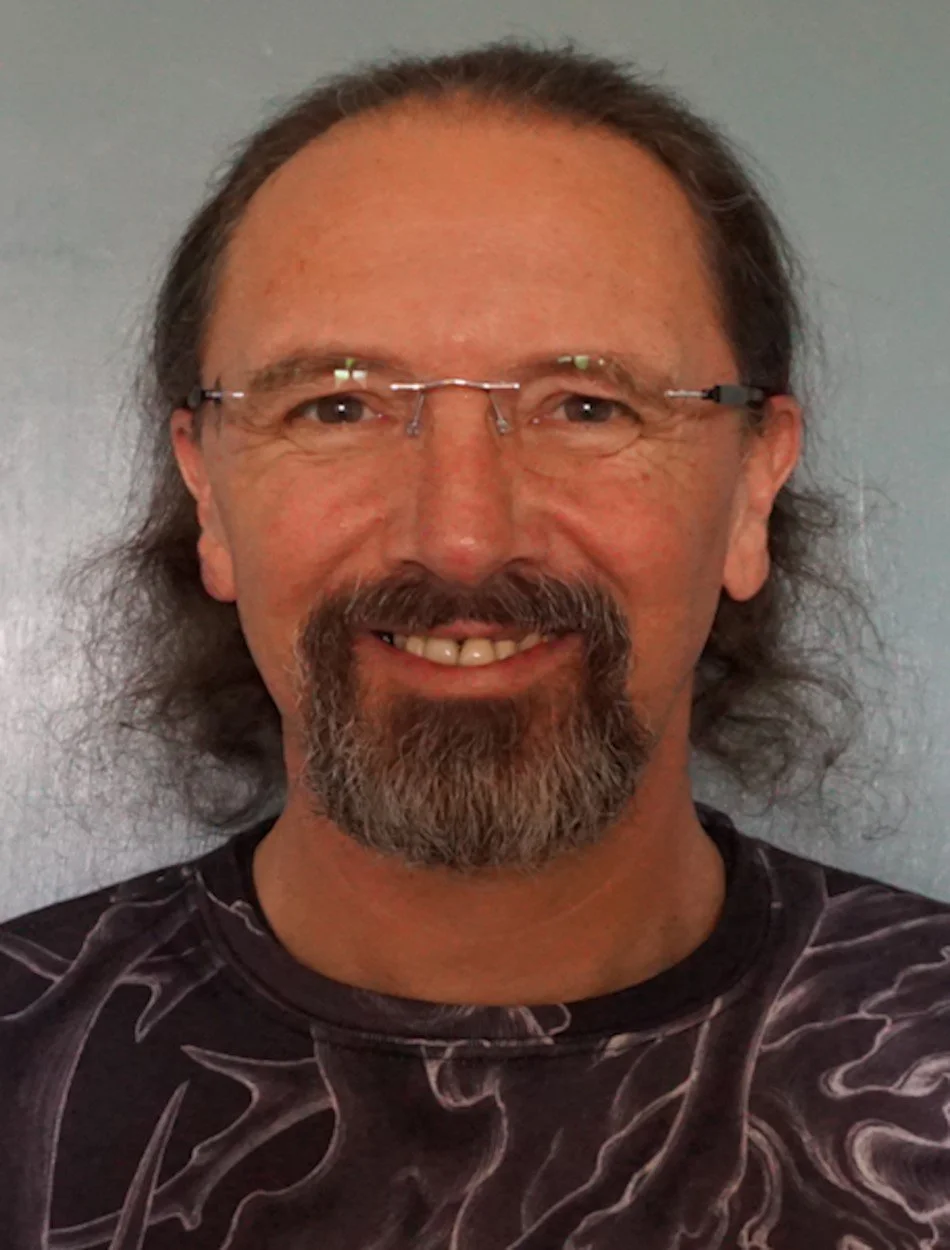
Interview with Self-Publisher Martin J. Best
1. What can you tell me about your experience as a writer?
I’ve been writing sporadically for almost as long as I can remember, and I have a binder full of hand-written short stories that date back decades. I grew up in an actively haunted house, so the paranormal regularly featured in my stories, although, in the early days, I did write some sci-fi. I’ve always held onto the ambition to become a professional author, but the economic realities and time pressures of my rather complicated life meant that it was never a realistic option. It wasn’t until the death of my father in twenty-twelve, after which I gradually assumed the duties of full-time carer to my elderly, clinically blind, mother, that I unexpectedly found myself with an opportunity to write.
I started by rewriting a short paranormal story called The Moth Trap that I’d been kicking around for many years. My wife, Kim, advised me that it needed to be longer, so I expanded it somewhat—it’s still extremely short!—and I published it in twenty-fifteen. Pleased with how it felt to have published something, I set to work on a second short story, A Step Aside. Originally intended as a time-slip story, A Step Aside became a hidden realm fantasy. I returned to my favourite subject, the paranormal, for a third short story, The Novice Ghost Hunter, which is loosely based on a personal experience. It was well-received, and the six novel Ghost Hunter series—now revised as The Malachi Hunter Stories—followed. I had become a full-time author.
I’m an advocate of writing about what you know—whether that be your own imagination, real-world locations, or personal knowledge and experience—and all the stories are set mostly in my hometown of Torquay on the optimistically named English Riviera. Having that common ground allowed me to incorporate the Celtic mythology of A Step Aside into The Malachi Hunter Stories, making them a blend of supernatural thriller, horror, and dark fantasy. When I felt that the adventures with Mal and his team had reached a logical conclusion—I feel that some series continue interminably—I turned my attention to his daughter, Carolyn, and started the young adult Carolyn Hunter Stories from a whole new perspective. There are currently two novels, The Baby Farmer’s Ghost and Hunter & Allen: Paranormal Investigators, with a third, Children of the Gods, in progress, and three more to follow.
It’s probably a good moment to mention that I’m what’s known as a ‘pantser’ when it comes to writing. I have a general idea of the story I wish to tell, and some specific events I wish to include, but that’s it; everything else evolves organically. Occultus, the final Malachi Hunter Story, is a good example. I’d decided it would be the occult horror novel that I always wanted to write; no ghosts. My only inspiration was a story from an acquaintance, a deacon at a Pentecostal Church, who related how, when his congregation took over a long disused Methodist Church, they found a Satanic temple in the cellar. The story grew to include: a family of Plymouth Brethren, the Order of Nine Angles, a succubus, the Celtic Gods, and, you’ve guessed it, a haunting. In my world, real and imaginary, ghosts crop up unexpectedly.
2. What made you decide to write a book?
From a purely technical perspective, up until the Malachi Hunter Stories, I’d only ever written short stories, so writing a book gave me far greater scope to develop characters and storylines. From a personal perspective, I wanted to write a book that I wanted to read; and that would, hopefully, entertain others. I enjoy reading stories that could be plausible, so, like me, my ghost hunters accept that the paranormal world exists, but they search for explanations for the phenomena they experience. If I can leave the reader thinking, ‘That could happen…’ then I’ve succeeded.
3. What circumstances brought you to the decision to self-publish your book?
Initially, when I published my short stories, it was the route of least resistance. I did look at traditional publishing houses after writing my first book, but my work didn’t fit with what the majority of those publishers who were inviting submissions wanted. To be honest, the process put me off. If one’s MS was accepted, there was a loss of artistic control, and the expectations from the author regarding editing commitments and promotion were nearly equal to self-publishing; all for a relatively meagre return. As I came to know the author community, I met several authors who had left traditional publishing for these reasons.
4. What has your experience as a self-publisher been like?
In the early days, it was a steep learning curve; I’m still learning. I was a mobile DJ for many years before becoming an author, so I was familiar with some aspects of self-employment such as time management, promotion, and basic accounts, which came in useful. I was lucky, and grateful, that the legendary champion of indie authors, Leonard Tillerman, took a shine to the Malachi Hunter Stories, giving them all five-star reviews, which boosted my confidence and credibility.
There have, inevitably, been highs and lows. It can be incredibly frustrating when the books don’t sell, or there’s a low rating without a review, but ultimately, it’s all about patience and perseverance.
5. How do you respond to the negative stigma attached to self-publishing and self-published books?
I respond to this by saying that self-publishing opened the flood-gates for anyone to ‘have a go,’ leading to many poor quality books. However, there are talented career authors who have deliberately chosen this route, and they produce professional standard products at least equal to those of traditional publishing houses. Read a sample before buying!
6. What is one very important lesson you have learned as a self-publisher so far?
Whether by social media, exchanging emails, or personal appearances, it’s important to engage with readers.
7. What do you know now about self-publishing that you wish you knew at the beginning?
I know now how much time, and money, is spent on promotion!
8. A lot of authors of self-published books have reservations about promoting and marketing their book. Some even feel that it is a form of vanity or self-importance. What is your opinion about this?
I do understand this; it does, however, take on a different complexion when selling books is your sole income! I’ve come to realise that as the author, I’m inextricably linked to my books, and as such, I am an integral part of marketing the ‘brand.’ I’m particularly uncomfortable with book signings, but accept how important they are.
9. How do you promote your books and what form of book promotion has worked the best for you?
I currently rely on social media—mostly Facebook and X—with regular paid promotions using Written Word Media. As I have two series, I’ve found their three- or five-day Free Book Promo Stacks, with the first book in the series free. This generates sufficient downloads to put the free book at the top of several charts on Amazon, which leads to sales and KENP reads of the other titles, and usually a few ratings or reviews.
10. What are some other important things you have learned as a self-publisher?
The writing community is generally friendly and extremely helpful; I’ve made good friends all around the world. In practical terms, I’ve learned to format manuscripts, improved my working knowledge of Word, and applied discipline to my writing schedule.
11. Do you feel that self-publishing is a viable choice for other authors?
I do; but I suggest thorough research first. It’s certainly not for the fainthearted.
12. How do you feel that self-publishing their books has helped many unknown authors finally get the recognition their books deserve?
It’s certainly helped some authors, I’m sure. Although self-publishing can be effective, there are many factors that contribute to its success.
ABOUT MARTIN:
Martin J. Best is a native of Torquay, on the English Riviera, where he lives with his wife, Kim. Martin grew up in an actively haunted house, which has given him an abiding interest in the occult and paranormal. He has had a varied work life, and spent many years running his own mobile disco business. A full-time author since twenty-fifteen, when not working, Martin is a keen walker with dogs Shadow and Raven, enjoys an eclectic variety of music, and is an occasional ghosthunter.