
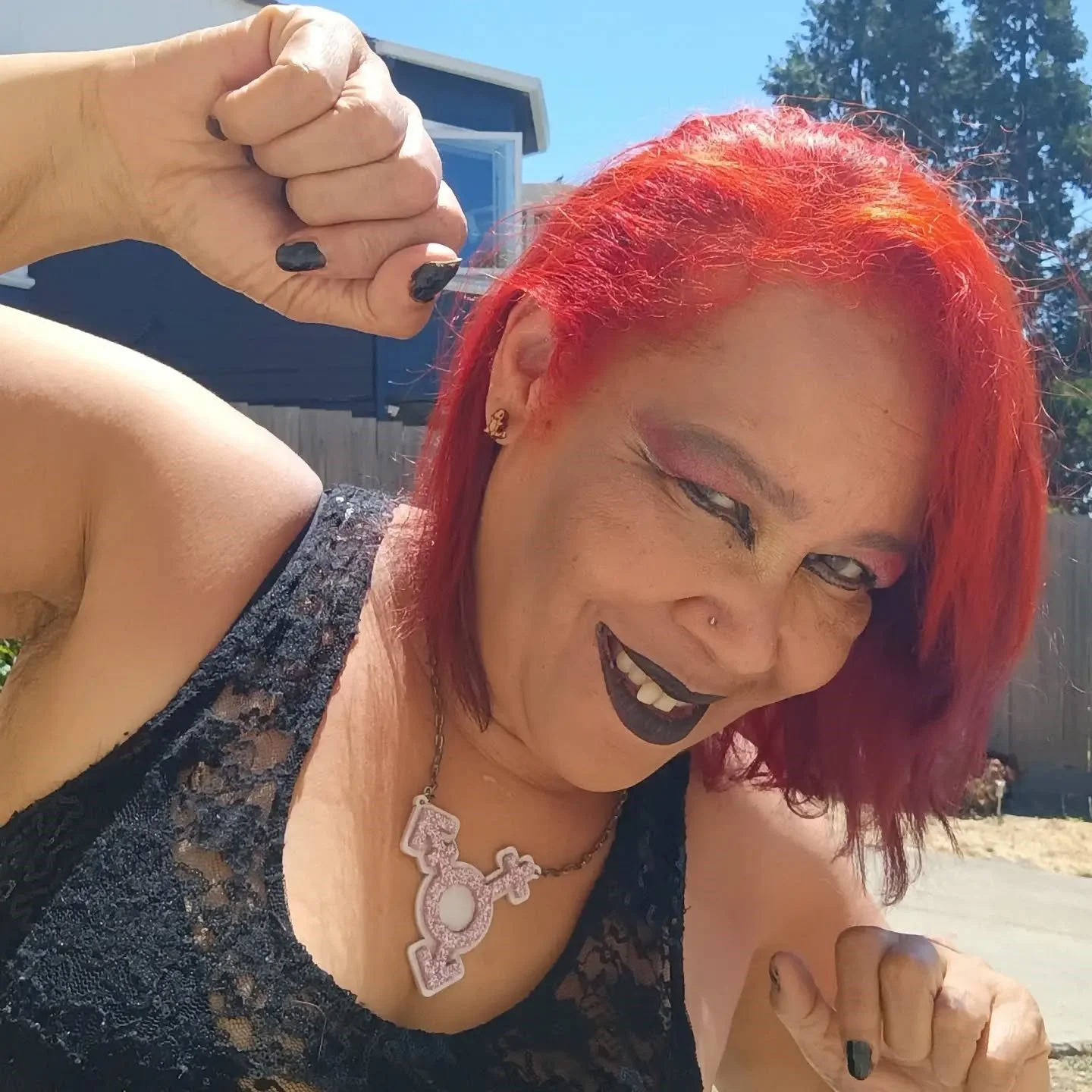
Interview with Poet Sumiko Saulson
1. How long have you been writing?
I have been writing poetry since I was a kid. When I was in third grade, I had a business writing custom poems for greeting cards for people’s parties and weddings. Then I would have them printed. My mother, Carolyn Saulson, helped me run the business and we paid rent with it. She was a published poet herself. I put out my first poetry chapbooks as zines when I was sixteen (called “The Coffee Files”) and twenty (called “Untitled”). And I got paid $25 for three poems for the Tenderloin Times when I was twenty, and the San Francisco Chronicle included me in its article about up-and-coming neo-Beat poets in that same year of 1988.
2. What kind of writing do you do these days?
I'm an Afrosurrealist and horror writer, and I write novels and short stories, but I'm best known as a horror poet. My poems invoke ghosts, spirits, and connection to the ancestors. I use monsters and metaphor to talk about mental illness, and deeper subjects like homelessness, racism, and other societal ills that I think are themselves horrors. My short stories include psychological horror, body horror, science fiction, horror erotica, sci-fi erotica, afrosurrealism, and afrofuturism. Many of my stories center African American, and LGBTQ people, like myself.
3. What compelled you to start writing poetry?
I started writing poetry when I was a kid. It’s really funny to me now, but what inspired me was greeting cards. I loved little greeting card poems, and wanted to grow up to work for Hallmark. I was about nine years old at the time. I started reading horror since I was eleven, the first novel for adults I read was Peter Straub’s Ghost Story. And when I was thirteen that I became interested in horror poetry, as in the seventh grade, I became a big fan of Edgar Allan Poe. By the time I was fifteen, I was sure I wanted to grow up to be a horror poet, just like Poe himself, or perhaps a novelist, like Stephen King.
4. How do you feel about whether or not a poet should be paid when having their work published?
Ideally, we should be paid. I have certainly put work out into the world that I wasn’t paid for, but I will say that most of the time, I was paid. Even if it is a very small honorarium, like $5 or $10, it shows respect and appreciation for the artist. Writing is a job, and artists in all fields should be paid for our work. But doing free work for charity, or working with for-the-love unpaid markets, is also respectable, and poets should be respected even if they weren’t paid for their work.
5. How has writing poetry helped you in other areas of life?
Writing poetry is very therapeutic for me as a person who has bipolar disorder with psychotic features and post-traumatic stress disorder. It helps me to express my emotions and connect with other people in conversation about traumatic experiences and even symptoms that are easier to convey to people in poetic language than in plain conversation.
6. What was your biggest accomplishment as a poet?
I’ve been nominated for a Bram Stoker Award for Poetry twice, and for an Elgin Award four times, I won a third-place Dwarf Star Award for Poetry, and was BayCon 2026’s Poet Laureate.
7. What are your thoughts about whether or not a writer should pursue an MFA in poetry in order to increase their chances of getting their work published?
I never got a Master of Fine Arts, and I didn’t get my Associates of Arts degree until I was fifty years old. I do think that I learned a lot about the craft of writing in college. I majored in English with certificates in creative writing and screenwriting, so nothing directly poetry-related, but I improved my ability at storywriting through the classes I attended pursuing a degree. So I would say that perhaps honing your craft would be a good reason to pursue a degree of any kind, although I do not know if it directly benefits one in terms of likelihood of being published.
8. What other poets have inspired you the most?
Edgar Allan Poe, Warsan Shire, and Langston Hughes are three poets that have very much inspired me, as well as Alice Walker, who I read a lot of when I was younger, and Tupac Shakur, who was a poet before he became a rapper.
9. What types of poetry are your favorite and why do you like them the most?
I just got done having a great deal of fun playing around with limericks and haikus. I have an affinity for rhyming poetry. I love abab rhyme scheme poetry, and often find myself falling into it consciously or subconsciously.
10. What are some of the challenges you have faced in writing poetry and how did you overcome them?
One challenge I ran into was the unpopularity of rhyming poetry in certain circles. I started to break up the rhyme schemes, try to overcome the stigma associated with it, and even tried my hand at non-rhyming poetry.
11. What is the best writing advice you have ever received and why do you feel it is important?
Toni Morrison said “If there's a book that you want to read, but it hasn't been written yet, then you must write it.” Anne Rice was a fan of the quote, and often repeated it directly or paraphrased it when she was giving advice to me and other upcoming authors on her Facebook page. It’s great advice! The best way to avoid falling into mechanical writing is to simply write what you wish to read.
12. If you have books of poetry published, please list the titles and where they can be purchased online.
● Dance of Necromance: Poetry Book of the Dead, on Mocha Memoirs Press.
● Doodooality: Shots Fired from Uranus, on Dooky Zines
● Melancholia: A Book of Dark Poetry on Bludgeoned Girls Press
● The Rat King: A Book of Dark Poetry on Dooky Zines
13. Where can we find some of your poetry published in publications online?
The last five of these audio links are poetry. Go here.
14. What advice do you have for aspiring poets thinking of getting their work published?
Although it can feel intimidating to put yourself out there, it’s important to keep submitting your work. One strategy I have used to challenge myself to try for higher paying markets, is to start out by sending poetry to them, then if it isn’t accepted, go to a lower paying market. Often, a free market would be a last choice for me, but if you have a lot of poetry to put out there, just getting it out there can be invigorating.
15. What is it about poetry that you love and how does this influence your writing of poetry?
I think poetry is the most intimate of writing for me. It comes from a place of deep emotional connection and immediacy that can be hard to duplicate in prose.
ABOUT SUMIKO:
SUMIKO SAULSON is the BayCon/Westercon 2026 Poet Laureate, a Two-Time Bram Stoker Award® for Poetry for The Rat King (2022, Dooky Zines) and Melancholia (2024, Bludgeoned Girls Press). Four-Time Elgin Speculative Poetry Award nominee for these and Doodooality: Shots fired from Uranus (Dooky Zines), and novelist whose short stories, poetry and articles have appeared in over 50 publications, including Weird Tales, Locus Magazine, Strange Horizons, Nightmerica: Corruptions of an American Dream, and This Way Lies Madness. Winner of the Afrosurrealist Writers Award. Their latest novel, Somnalia: The Metamorphoses of Flynn Keahi (sequel to Happiness and Other Diseases) is available on Mocha Memoirs Press. Find them at @sumikoska or their website.