Author Interview with
Tim Waggoner
1. When did you start writing?
I’ve been making up stories all my life, whether it was creating scenarios for my friends and me to act out on the school playground or writing and drawing homemade comics in middle school. But I first realized I could be a writer when I read a 1980 interview with Stephen King in Marvel Comics’ B&W Tomb of Dracula magazine. I was sixteen, and it was the first time I realized that people could choose to become writers, and that I could choose to.
2. What was your journey towards becoming an author like?
Slow at first. Lots of writing, submitting, and getting rejected. I’d heard professional writers say that “the first million words are practice,” and that helped me keep going. Plus, I loved writing too much to quit, although I was tempted at times! In my late twenties, I started selling short fiction fairly regularly, and in my thirties, I began selling novels to publishers. I’m sixty-one now, and I’ve come to believe that the most important quality a professional artist needs is psychological resilience because it’s a long, twisting road with a hell of a lot of potholes in it.
3. What can you tell me about your latest book? (Feel free to include an excerpt.)
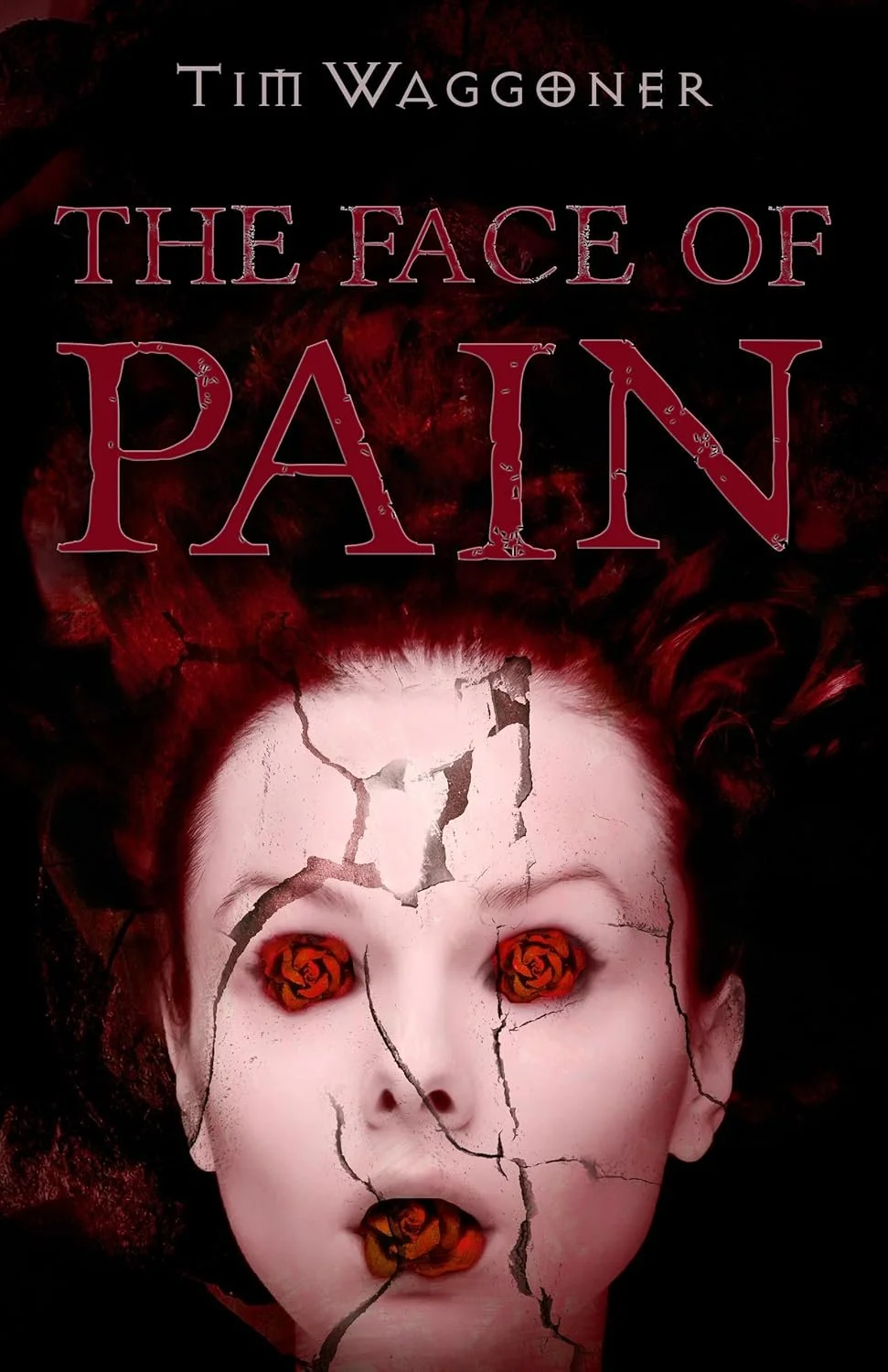
I’ve had two books come out recently from two different publishers. One is Terrifier 3: The Official Novelization, which is out from Bloody Press. The other is an original horror/dark fantasy novel called The Face of Pain from new small-press publisher Lefthand Path Press.
Here's the description: Tricia Everheart is diagnosed with uterine cancer, but despite her test results, she can’t escape the feeling that she’s not sick – she’s pregnant. When a mysterious red door appears in the hospital, she steps through and finds herself trapped in a nightmarish facility called the Red Tower. There, a cult of sinister physicians known as the Physickers worship a foul entity known as the Face of Pain…and they believe Tricia is its chosen vessel. Her husband, Aaron, follows her into the Red Tower, desperate to bring her home. But the deeper they go, the more they encounter horrors beyond comprehension. Will they escape the Red Tower before the Face of Pain enters our reality? Or will its birth unravel existence itself?
(Read the first chapter of this book at Tim’s blog here.)
4. What sort of methods do you use for book promotion?
Social media, my blog, my newsletter, my website, interviews, podcast appearances, presenting writing workshops, going to book fairs, attending conferences, being on panels…all the usual things. The most important promotion technique is to write a good book that people want to read and tell their friends about. Word of mouth is still the most effective promotion.
5. Where do you get your ideas for stories?
This might sound like a copout, but the answer is everywhere. Ideas pop into my head all the time – always have – and the trick is sifting through them to find the ones I want to develop into stories. Sometimes I see weird things as I’m going through my day, and I record them in the notepad app on my phone and maybe take pictures, too. Sometimes bits of song lyrics or poetry suggest story ideas, as do science articles and true-crime documentaries. And I mine my own experiences for story material as well.
6. What are you working on right now?
I can’t tell you! I’m under an NDA. But I can tell you it’s a media tie-in novel. Hopefully, the IP holder will announce the project soon.
7. Any advice for other authors?
I talked about the importance of psychological resilience earlier. I also tell authors to try to write with a close identification with a character’s point of view. Most of us passively watch stories on TV or in the movie theater more than we read. Our perspective is that of an audience member, and beginning writers write that way. But the most effective fiction is written from a specific character’s perspective in a scene. Writers need to imagine they are the character, thinking, feeling, and doing the things that this character would do. This perspective is the great strength of fiction.
ABOUT TIM:
Tim Waggoner's first novel came out in 2001, and since then he's published over sixty novels and eight collections of short stories. He writes original dark fantasy and horror, as well as media tie-ins. He's written tie-in fiction based on Supernatural, The X-Files, Alien, Doctor Who, Conan the Barbarian, A Nightmare on Elm Street, Grimm, and Transformers, among other properties, and he's written novelizations for films such as Ti West’s X-Trilogy, Halloween Kills, Terrifier 2 and 3, Resident Evil: The Final Chapter, Kingsman: The Golden Circle, and xXx: The Return of Xander Cage. His articles on writing have appeared in Writer's Digest, The Writer, and The Writer’s Chronicle. He’s the author of the acclaimed horror-writing guide Writing in the Dark, which won the Bram Stoker Award for Nonfiction in 2021. The follow-up, Writing in the Dark: The Workbook, also won a Stoker in the same category in 2023. He won another Stoker in 2021 in the category of Short Nonfiction for his article “Speaking of Horror,” and in 2017 he received the Stoker for Long Fiction for his novella The Winter Box. In addition, he’s twice won the Scribe Award, given by the International Association of Media Tie-in Writers, He's been a two-time finalist for the Shirley Jackson Award and a one-time finalist for the Splatterpunk Award. He’s served as a mentor for HWA for many years, and in 2015, he was given the organization’s Mentor of the Year Award. He’s also served on HWA’s Lifetime Achievement Award committee several times. His fiction has received numerous Honorable Mentions in volumes of Best Horror of the Year, and he’s had several stories selected for inclusion in volumes of Year’s Best Hardcore Horror. His work has been translated into Russian, Portuguese, Japanese, Spanish, French, Italian, German, Hungarian, and Turkish. He’s also a full-time tenured professor who teaches creative writing and composition at Sinclair College in Dayton, Ohio. His papers are collected by the University of Pittsburgh's Horror Studies Program.
Links:
Instagram: tim.waggoner.scribe
Threads: @tim.waggoner.scribe@threads.net
Bluesky: @timwaggoner.bsky.social