Author Interview with
Loralee Clark
1. When did you start writing?
I began writing poetry when I was 8—copying another poem’s format but changing the characters. I was always enamored with synonyms, antonyms, and homonyms; I would make lists of words all the time on sheets of paper I saved in a folder. When I was in elementary school I carried a thesaurus with me; in high school I was accepted into a gifted and talented writing program which lasted for a semester. I had a short story published in a free local paper when I was 15 and I was hooked; my junior year of high school I qualified to take a college-level poetry course and was constantly typing poems on my typewriter.
2. What was your journey towards becoming an author like?
It was very stop-and-start, mostly due to circumstance: when I got to college, I got a B.A. in English with a concentration in poetry, and I loved writing and I loved teaching, but I knew I didn’t want to be an academic, per se, so I didn’t want a Ph.D. in English. And while my professors said my poetry was good, I had no idea how to submit it to try to get it published. I had no idea how to “be” a writer so I got my M.A. in Speech Communication and then got a teaching job at the College of William & Mary where I taught for 8 years (as well as at local community colleges). That whole time I was writing and I thought I might get an M.F.A. in Poetry so I could teach writing at the college level, but after taking one course at Old Dominion University, I ended up marrying and starting a family. I figured after my children were in school, I would apply to a low-residency M.F.A. program, however, both of my children are autistic and I didn’t have that opportunity as an option—I needed to be focused on their needs. I submitted poetry to literary magazines sporadically, after reading that behemoth resource book in the library published by Poets & Writers, but after my oldest son graduated high school, I decided to start taking myself seriously.
In 2023, I took all the poetry I hadn’t had published yet—which was a lot more than had been published—and began submitting to over 200 literary journals in a year. My publication rate was around 10%, which might sound sad, but in reality, is pretty high for poetry. (Most journals publish 5-8% of submissions they receive.) In 2024, I gathered all my published poems and put together three different manuscripts for a chapbook. Two were not very strong, but I decided to take a chance on submitting the third, and a publisher picked it up, first try! That made me question her legitimacy (which said a lot more about how I viewed myself, not her), but eventually gave me motivation to start a Substack about the writing process. In 2025, I had two chapbooks published and I have a second book of poetry coming out next month.
3. What can you tell me about your latest book? (Feel free to include an excerpt.)
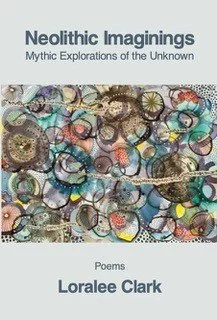
My first book, Solemnity Rites (2025, Prolific Pulse Press), asked two questions: What makes us human? And how do we practice our humanity? Two poems in there focused on the beginnings of Neolithic landscapes shaping us as humans. My second book, Neolithic Imaginings: Mythical Explorations of the Unknown (2026, Kelsay Books), takes that thread I began pulling on in the first book and asks much more specific questions about Neolithic life and monuments. Each poem explores different spiritual, mechanical, ceremonial, and landscape questions in connection to different cultures, new agricultural practices, and livestock husbandry occurring at the time. The poems paint pictures of humans as an ecotone of the landscapes in England, Ireland, Scotland, and Wales. I examine 15 different Neolithic monuments (henges, a crannog, dolmens, sepulchers, and a menhir). Here’s an example of a poem I wrote to answer, “How and why would Neolithic peoples used a henge?”
Rollright, England: Extended Cognition
We send our questions with the logs of pine, the black henbane
we send questions into the fire, inhaling the smoke’s plumes
as trees and meadow read the stars’ maps embedded in our bones.
We lift and lay the slabs, our ladder to the stars,
healing and fortifying, energy flowing from the plants and smoke
through our chests into the stones, singing itself to sky.
We laid the boulders of this compass rose, this womb, cup of spirit
rings rippling outward, a path leading into the center: balance,
wholeness, writing our presence on the land,
scribing our roots above the ground.
We read the moon’s face, hanging,
whispering her rhythms of the sheep and cows that have come:
we learn to separate and stable them by sex,
let the births happen in the spring with plenty;
soon we build the fire high with rowan branches
as the grain cakes are made with rosemary.
After they bake, we wipe the ash on the cattle’s heads, the sheep’s wool
to protect them for the summer pasturing,
walking them in rings around the cracking fire,
the sheep jumping the coals later as the stars shine like chips of ice overhead.
Burn the wood, scatter the ash
fur and skin, fire within
let protection begin:
living meadow, fire a god
ash the holy protection spoken by stars.
We claim the connections, the doors, windows and pockets,
we tie and strengthen the cords living between the moon and our bodies,
between the animals and their thrumming
swaying, slotting into the spaces of our bodies
where they fit, seamlessly: joined twinnings.
4. What sort of methods do you use for book promotion?
I was very fortunate that my first publisher for Solemnity Rites hosted a Zoom book launch and supported me by nominating me for two awards. In addition to that, I attend book expos and festivals; give readings online and in person; donate a copy to my library; list my book links and reviews on my website; send press kits out to literary journals who have published my poems which are in my book; and do book signings at local bookstores. There are a lot more ways I could promote my books, but I am limited in time and resources, so I choose options that fit best for my family.
5. Where do you get your ideas for stories?
I have always been a very creative and curious person; when I have questions, I research. Poetry began as a way for me to process my emotions, my father’s alcoholism, the sexual abuse I endured, etc. It served me well in that regard. In high school I began researching “confessional poets” because I wanted to know more about them, as I was one myself. As I got older and learned different research methods in college, I found myself asking more myth-based questions and began incorporating them into my poetic repertoire: why was Greek and Roman mythology revered, but Egyptian mythology, which was older and more diverse/richer, not studied as much? Then my learning became centered more on feminist theory and soon I was questioning EVERYTHING and writing and drawing answers to help me understand the world around me.
6. What are you working on right now?
So, I have ADHD, and I don’t work on just one thing at a time, so these are the things I’ve got my fingers in right now:
This winter my focus was on the solstice: what winter practices that used to be shared and community-driven still exist for us? How have they changed? What can I reclaim for myself and others to live better in harmony with the landscape around us? Many cultures revered deer and goats in the winter season, so I drew many skulls incorporated with bare trees.
All of the covers of my poetry books are graced with my art; I’ve been very lucky. Ever since I began writing Neolithic Imaginings, three years ago, I’ve been obsessed with circles and the petroglyphs found on different Neolithic monuments. I am still drawing and learning from them, experimenting with repetition and abstraction that calls in feelings of outer space and star systems, the ocean, and movement.
I just finished a poetry book about a man who helped raise me. He was our neighbor down the road; he and his wife didn’t have any children of their own and he would “borrow” me a lot. He was a botanist & entomologist, a born teacher, and I was a sponge—a born student with my curiosity. He was one of the few adults who acknowledged and supported my intelligence when I was growing up, and after he died in 2014, I was so involved with raising my children, I never stopped to grieve. My manuscript, “Not a Father, Not a Daughter” is how I chose to grieve and hopefully, is a fitting tribute to our relationship.
And because of my work with that book, I’ve been remembering and writing poetry about Maine (where I grew up)—I feel like my artwork and writing is leading me in a spiral—first with emerging from an umbilicus perspective of confessional poetry, outward into myth, now back again into a wider, larger understanding of how landscape helped to shape me.
In the sidelines are poems about the natural world and diversity which I’m shaping into a manuscript right now, as well as exploring alchemy, but not so much from an historical perspective, rather from the perspective of “what if women had been historically involved and were making the scientific and the magic exist in relationship with one another?”
7. Any advice for other authors?
Absolutely: it’s difficult forging a path forward when you are such a unique individual, when your writing is so individual and when the others that have come before you may not know what is best for you as a writer. Therefore, ruthlessly lean into your obsessions; it doesn’t matter if no one else understands it because it is not their journey to understand—it is yours. To make art is to listen to your curiosity, to not give up on yourself and to become as soft and vulnerable as you can. That’s where the magic lies. It is never an easy journey, but it is always worth it. Be genuine, be generous, and be open. Support other artists the way you want to be supported, regardless of the world burning around you. The world has always burned—do the work you were put here to do.
ABOUT LORALEE:
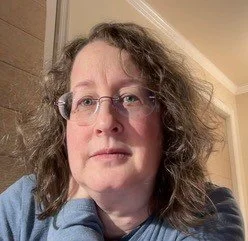
Loralee Clark has a fourth chapbook forthcoming: Neolithic Imaginings: Mythical Explorations of the Unknown (Kelsay Press, 2026). Clark has been nominated for three 2026 Pushcart Prizes. She resides in Virginia; visit her website. Her Substack is No Such Thing as Failure, which focuses on the process of creativity.