Author Interview with David O’Mahony
1. When did you start writing?
I think the first story I ever wrote was when I was 12, maybe 13. It had something to do with the devil being summoned to a pub, though it’s been lost to time (probably for the best). I did some more sustained writing toward the end of secondary school, when I would have been 16 or 17, and had made some headway on a couple of fantasy novels when a mix of college and, later, work got in the way. But I got better, and despite intermittent false starts over about a decade, returned to it with gusto from about 2023.
2. What was your journey towards becoming an author like?
Meandering, haha. I’m a copy editor, among other things, and found I got so burned out telling other people’s stories that for years I didn’t have the energy to tell my own. And I lived abroad briefly, then went back to college for graduate studies and that took up a lot of energy. Got married, bought a house, and had three kids as well! I think I’m making up for lost time.
3. What can you tell me about your latest book? (Feel free to include an excerpt.)
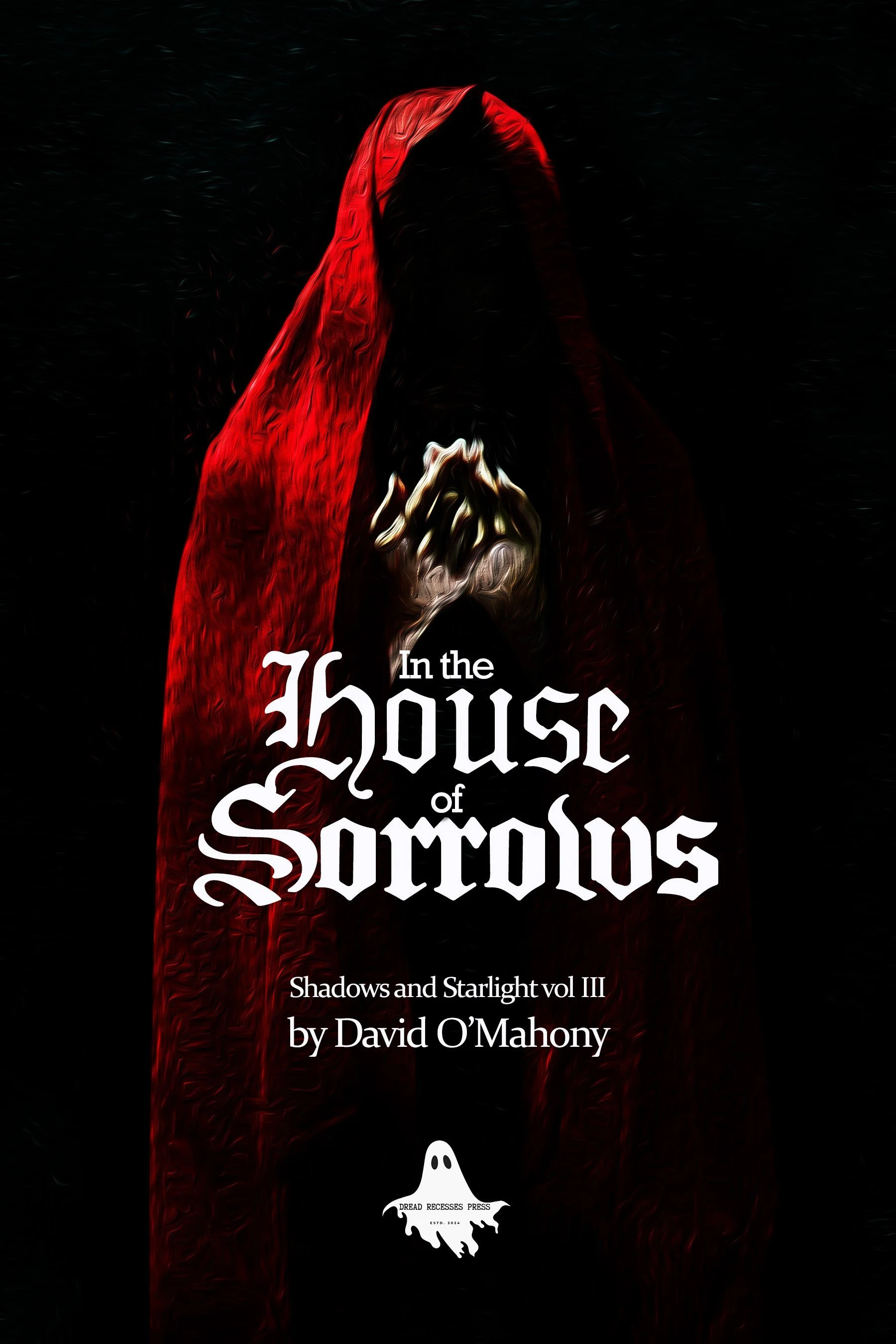
I’ve just released my third collection, In the House of Sorrows. They’re bundled as a series, Shadow and Starlight, but while some of the stories are related, and many are in the same story universe, they’re all standalones.
My first two, The Ties That Bind and What Gets Left Behind, were loosely themed around connection and remnants, respectively, but In the House of Sorrows is more general. It’s got folk horror, hauntings, occultism, cosmic horror, and even one very sexy story I’m hoping my parents don’t read. There’s also quite a strong Irish flavour to this book, though that wasn’t deliberate. It’s easily the best collection I’ve released so far, with 14 previously published stories and 6 getting their first run out in the book.
This is an extract from the opening story, “Apotheosis.” It’s in my top 10 favourite pieces that I’ve written, and is about an entity mummified in a bog who, for centuries, was worshipped as a deity, but as the story opens that belief has faded and the village is trying to distance itself from it.
This is the bog maiden, simply known as God, reacting to the last time they tried to get rid of her, despite her having saved them all:
God watched them die in droves from her peat-walled hall. Weak little things, she thought. Cursory things. Only when the blue-eyed child had landed on her threshold begging for help, starving and her skin already sloughing off her bones, did God take pity. She was supposed to care for everything in the bogland, wasn’t she? And weren’t these mawkish humans part of the bog now as well? The toads and lizards loved her for keeping them fed, why not these creatures? So she’d absorbed the thing even as the agony nearly tore her apart. But when she turned to the humans, all twilight skin and furnaces for eyes, instead of letting her sit at their hearths they tipped her into the filthy peat like a memory they couldn’t stand to face. The blue-eyed ones jeered at her, leered at her. She spat black oaths at them even as the copper blades cut her throat, cut her hands from her, spilled her essence into the ground she’d come from. Some spells don’t need to be cast. They just need to be felt.
4. What sort of methods do you use for book promotion?
This is the bit I, like a lot of writers, find hardest. I’ve never gotten far with trial reels or Instagram posts, though I’ve done a bit better with Facebook and even my own website. But I’ve been involved with promoting an anthology of Irish horror – they were kind enough to name it after one of my stories, A Graveyard for Gods – and I’ve learned a lot about promotion methods that way. But definitely social media; it’s essential, even if you have misgivings over Meta’s or Google’s use of personal data.
5. Where do you get your ideas for stories?
From all over. One of my older stories, “A Winter’s Wrath,” is a yule/Christmas tale (I took apart seasonal elements and made them into something more sinister) but kicked off in my head after I went for a walk and saw five gravestones in a row on a hillside next to the local church. So the first line is “Five graves on a hillside”, but in this case it’s the character’s family.
A piece in my latest book, called “Final Voyage,” was inspired by a visit to a graveyard where a clutch of my ancestors are buried. While proofing it recently, I realised I’d written a few other stories into it, to do with various people buried there, so I guess I’ll have to revisit some of those, haha.
Occasionally, I’ll get a random “what if” floating through my head. My story “Atonement,” for example, is “what if you prayed and something you didn’t expect answered”. I keep a list of story submission calls, too, and go back to it for inspiration every now and then even if I’m not writing for that specific publication. Other times the actual title might occur to me, without any story at first, or I might think of a line or scene and then write a story around it.
6. What are you working on right now?
I have a novella and two novels on the go. The novella, The Undying, is a mix of undead occultism and ghost stories, and is set in an old house in West Cork. Two characters – one is an undead grave robber, the other a medium – are in the area for different reasons, but their storylines collide. It’s been a lot of fun to write.
I’ve also written the opening chapters of a medieval horror fantasy, When the World Breaks, which will bring in elements of ancient Irish mythology with cosmic horror and is about three people who have to work with the declining Celtic gods to try and repel an entity that’s breaking into our world. I’ve been quite liberal with how I’m incorporating mythical elements, though; there’s no strict retelling of anything, nor is it an attempt to be historical fiction, though it is set in historical regions of Ireland and Britain.
I’m much further along on a cosmic horror/ghost story novel called Worlds Without End, which is set on a fictional island off the coast of New England (an homage to Lovecraft, King, and Poe). That also leans quite heavily on Irish folklore, actually, and I’ve used that island as a setting for a couple of other stories. That will probably be out in 2027, provided I actually finish it this time…
Meanwhile, I should have a novella, Nothing Stays Buried, out in October this year. That blends witchcraft, curses, and hauntings with a little bit of possession.
7. Any advice for other authors?
Write the stories you want to read first and foremost. The only boundaries in horror are the ones you set yourself, so it’ll be good for you to push a story out to see how weird it can be. Also, horror doesn’t have to be scary. Creeping dread is just as effective. Don’t feel boxed into a genre, either; I’ve written literary horror, dark fantasy, light fantasy, literary fiction, and even a children’s chapter book (one copy currently exists, which was a gift for my daughter, but I will hopefully get it published someday).
ABOUT DAVID:
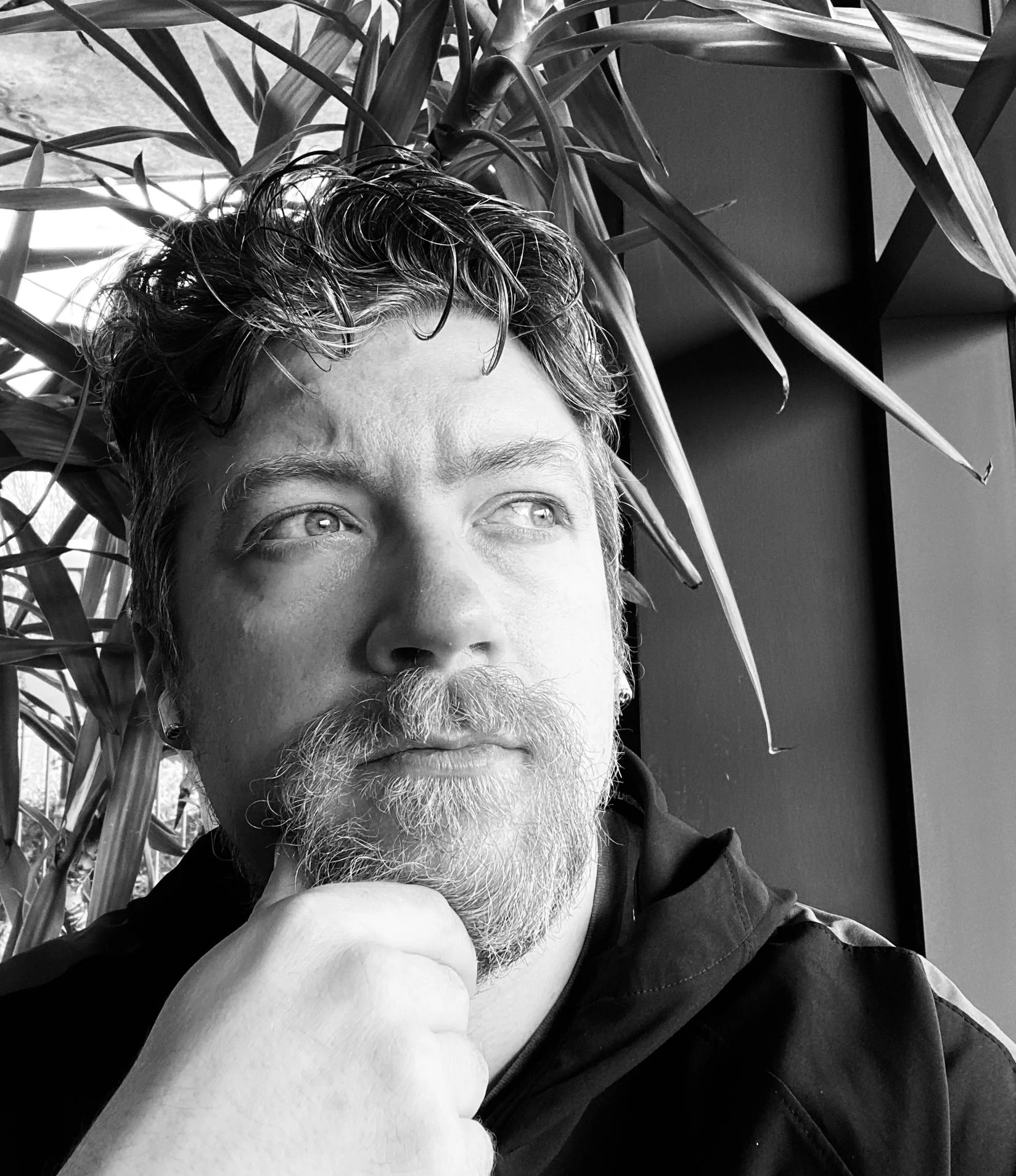
David O'Mahony is a horror and dark fantasy writer from Cork, Ireland. His work has found a home in more than 80 anthologies and magazines, including with KJK Publishing’s Horror Collection, Books of Horror, British Fantasy Society, Dead Fox Publishing, Cloaked, Inkd, Temple Dark Books, and others. He has written nonfiction at Irish Examiner, where he is a columnist. He is the author of three collections - The Ties That Bind (2024), What Gets Left Behind (2025), and In the House of Sorrows (2026) - as well as the forthcoming novellas Nothing Stays Buried and The Undying. Find him at his website or Threads.