A Few Hundred Words about a Hundred Words:
Meditations on Drabbling
By J. Rocky Colavito
You’ve got a hundred words, no more, no less. And you’ve got a story to tell. It may sound daunting, or beyond your limits, but it can be done. It starts with an image from a situation, a snapshot of seconds in something bigger. You’ll agonize over syntax and diction, and hate yourself for the edits. But those agonies are part of the learning: about brevity, about paring, about the wonder of words. You’ll find the thesaurus useful again. Anyone can write a drabble; it’s one of the foundations of the nuts and bolts of writing. This is just one example.
I’m gonna come clean to start this essay; I was afraid of drabbles because they confounded me. I never taught the form in my horror writing classes for non-majors because of this obstacle. If I couldn’t do it; I couldn’t very well make my students do it, could I?
What confounded me? Any number of things: brevity, completeness, complexity, probably other things that, in retrospect, seem like great excuses to wuss out from a challenge. The fact that I had students writing single sentence stories of six words, and six-sentence stories, each sentence with six words in it, should have told me that it wasn’t the kaiju I’d made the form into.
Took me awhile, but that was then, this is now. I devote some of my writing time every day to writing drabbles (usually six, sometimes more), and, as with any task, the more times you do something, the easier the task becomes. And when you get practiced in the one-hundred-word form, you’ll find a huge number of opportunities available to you, some of which can make you money.
I promise I’ll get to these opportunities as I work through the intricacies of crafting a viable story in one-hundred words. But it might help to define the form first.
According to Wikipedia (it’s okay to use it for something brief like this article), drabbles originated in the 1980s because of contests that attracted British science-fiction authors. The general guidelines for drabbles, outside of the requisite length, include: telling a complete story (beginning, middle, end), having conflict of some kind, having at least one character affected by the conflict, and evocative language that calls to mind a setting or mood. That sounds like any other type of story, doesn’t it? That’s some of the battle, think story in a snapshot, telling the story of the picture in a hundred words.
So how do you get a story from a picture? Default to the reporter’s questions: Who’s in the picture? What’s in the picture? Where’s the picture depicting? When is this scene depicted happening? Why is the picture composed as such? How do the elements interact?
Of course, there’s many other ways to frame the questions: Who is the story about? What is most arresting about the scene? Where are the most significant elements of the picture? When is the action taking place? Why is the protagonist performing the act? How is a feeling evoked by the other elements?
I can do this all day, but I’ll stop there.
The answers to those questions, and others, are the raw materials for a story. But a picture prompt isn’t the only way to come to a story idea.
One of the benefits of being in a writer’s group, besides built in opportunities for support, beta reading, collaboration, and publication, is that very often you will receive daily prompts in your DMs or e-mail. I’m in two different groups, and also have a ton of prompt inspirations (I’ll expound, I promise!), so I’m rarely at a loss for words. Sometimes I’ll get images, other times I’ll get a scenario (one I get recently involved a 911 operator who got a desperate call from her own phone number and heard her own voice on the other end), and still other times, I’ll get three words or phrases (e.g. Plywood, Porch Goose wearing a witch’s hat, banana slug). So those become the mechanisms for inspiration. Some may look at “banana slug” and think “WTF?” That was the easiest part of the prompt if you know that the University of California: Santa Cruz, adopted the creature as a mascot. So a character wears a slugs t-shirt, or is watching a game involving the school, or is listening to the school’s podcast (Banana Slugs Peals—anyone?). “If you don’t know that, you find yourself researching, which you’d do anyway, right? Don’t look at the floor when I ask you a question!”
Sorry, lapsed into teacher mode for a second there. I’ll try not to do it again.
But you don’t need to be in a writes’ group to get these benefits—though I strongly urge finding, befriending, and working with members of your particular writing tribe. One of the things that I’ve spent my disposable income on is decks of cards: specifically, tarot, gaming cards (cryptids and yokai and mythical monsters—oh my!), and, most recently, conversation starter cards. I just finished a drabble collection where every drabble was inspired by a card pulled from each of the decks I possess. These questions range from the mundane: “What’s the most memorable meal you’ve ever had?” to the probing: “If you could speak with a dead someone for an hour, what would the conversation look like?” Turning these toward darker ends is what I do, but they’re really available for anyone as writing prompts. I’ve spoken with some of my writer friends and to date have not heard of anyone else who’s using these types of cards as prompts, so maybe I’m on to something. The other cards do much the same: give a cryptid, a yokai, or a kaiju a backstory, pit them against each other or human adversaries, probe their motives, cast a light on their lives—you know, the same kinds of things that you’d do with a character. Tarot cards are even more multidimensional: use the images for description or inspiration, the upright and reversed traits as story starts, a set of qualities of your own for the card placed horizontally (e.g. an amalgamation of meanings from upright and reversed) or the allegorical dimensions embedded in the cards to drive a drabble. You won’t be able to do this all at once, necessarily, but that’s what longer flash fiction and short stories are for.
And, honestly, you don’t need any of these to come up with something for drabbles. I did a drabble challenge (self-inflicted, one of my writer friends asked me “why the fuck would you do that to yourself?”—answer—cuz I can.) in August 2026 where the aim was to put together a collection I could self-publish. I ended up doing five drabbles a day. So, where did I get subjects? From inside the dissonant kaleidoscope of my head. I just threw stuff at the wall to see what stuck. The drabbles are horror adjacent, so I’d get challenged by drabbles on shoes, for example, like how do you kill someone with a shoe (fuck you pumps, anyone)? Or outré kitchen utensils (like lobster forks; they can really do a number on someone’s eyes, especially when you use the forks for serving yourself). Or non-Shakespearean drama (the playwrights from Shakespeare’s time were super dark tragedians, Thomas Kyd has a protagonist who has more shit fall on him than anyone should, and he ends up biting out his own tongue). Or shitty fifties B-movies (believe me when I say that the Giant Claw is pissed off over being laughed at). Or giallo tropes (black gloves holding a blade that slits white skin is chilling). Point is, either ask people for suggestions (that’s how I got the obscure utensils), or spelunk your interests, passions, or knowledge. It’s like the produce department at an upscale world grocery store; you never know what you’re gonna find.
Bottom line; the inspirations for short pieces are as easy to access as a few clicks on your keyboard, a gaze around you in a public space, or your Amazon or Etsy cart. So find them and get writing!
Since the question of writing now arises, let’s ponder the benefits of writing drabbles. This first one makes me lament not having used drabbles more in my horror writing classes. Editing is one of the most challenging skills to practice, mainly because it requires a trained eye and adroit mind to effectively complete. Most students think that editing is running spell and grammar check (which have their own issues—like not recognizing homonymic misspellings) or something you do with a similarly inexperienced peer. Because there’s so few words, and there’s always a tendency to go over the word count, a drabble is a mini-course in figuring out where to edit, what to edit, and how to use words more economically without losing effect. Sentence combining via subordination, an overreliance on adjectives and adverbs, modifying repetitive diction, and interrogating word choices all are part of editing, and a drabble gives the space to practice.
That’s benefit number one; benefit number two is expanding your writing process. Think about it; you have an image, or an exchange that you’ve heard, or a what if question that pops into your mind at three AM—which is why you should keep a large pad and pen on your nightstand—but are not sure about how it could become a story. The drabble is the seedling. It probes the questions raised by the seed, and gives you a basis for nurturing the seedling into something grander. The first story I ever published through a magazine started with a single sentence: “we shouldn’t have messed with Sasquatch.” The “seedling” was a six-sentence story capturing the consequences of messing with Sasquatch (I know, it wasn’t a drabble, but the idea is similar). From six sentences it became a piece of flash fiction framed around a particular type of story I envisioned: found footage horror. In the course of writing the flash fiction, I got really invested in a character—the tracker sent out to search for the missing film crew—and the short story became his, and the place of the Sasquatch within his life. The last was the story that got published; it’s in a defunct magazine called Dark Dossier if you care to track it down, search “Red Eye.” The drabble, or in my case the six-sentence story, became a valuable part of the process, just as editing is.
Lastly, there is a market for drabbles; flash fiction contests and publication opportunities abound. WATG Press publishes flash/short fiction exclusively and runs a monthly drabble contest that publishes the winners in online form, and compiles the winners and select other submissions in a yearly collection of drabbles. Wicked Shadow Press regularly publishes flash fiction collections under various themes (the latest one is centered on Curses). Both are great to work with. [In the interest of transparency, I’ll mention that I have worked regularly with both presses and have had success placing my work with them, but I would recommend them with the connections because they are a known opportunity for people to publish flash and micro fictions.] If you are early on in your career, publishing should be foremost on your mind, as opposed to making money from writing—I acknowledge the debate here and am merely expressing a viewpoint. You make your own choices about whether or not unpaid or low paid publishing is for you, but I can say with experience that self-publishing on Amazon doesn’t create a viable income stream for most folks, and trying to catch on with a name press, especially with short fiction, is full of frustration. My two cents on whether you should avail yourself of low/no pay opportunities; you make your own choices.
There are also paid contests for drabbles; finding them is tied to Substack or Facebook group subscriptions, trolling the internet regularly for calls for stories, and following individual authors known for short fiction work. I won’t mention specific people here because I don’t want to show favorites, and, at my age, I will certainly miss someone. When you do find authors that you find interesting; their personal sites and Substacks are worth regular visits because you’ll get all kinds of useful information about writing, work shares, prompts, and opportunities to meet others and form collaborations and groups to support each other’s work. That’s what finding your tribe means—becoming part of a community.
Drabbles have become a regular part of my daily writing routine; I can usually expect at least six hundred words daily because I challenge myself to write three for each of the prompts I receive from my two writing groups. I have two completed collections of drabbles in the editing process, and am working on a third compiling stories from the prompts. This is one of the last benefits; they are a great way to painlessly put together a collection of work to self-publish or send to a press that publishes collections of short fiction (see WATG press!). You write three a day for a month, that’s ninety some pages, a hundred when you include dedications and a preface.
Sum total is this; don’t overlook drabbles as part of your writing repertoire; you’ll learn a lot from doing them, gain a lot from editing them, and provide a solid basis for future stories or longer work, and collections of your own writing.
What are you waiting for? Get to drabbling!
Appendix 1
Wicked Shadow Press: https://www.facebook.com/wickedshadowpress/ (most up to date web presence; website hasn’t been updated in a while.
Writing Against the Grain Press: https://watgpress.com/
Appendix 2
Specimen Drabbles
Meet Me on the Corner
The place itself has seen better days; the huge picture windows are like carnival mirrors, revealing dim lights and hunched figures around a horseshoe fronted with unpolished chrome stools that don’t move.
The “n’ on the sign is burned out, saying “Di-er”; seems like it’s an accurate description given the number of visible patrons.
I see her walking towards me slowly, dying cigarette in her left hand. I open my arms and pull her close, shielding her from the shitstorm our lives have become.
She looks up to me with leaking eyes; I nod.
We enter the Di-er, take our seats, accept the offered coffee, and go silent and still.
We’re two more patrons in the painting.
As Seen on TV
“C’mon, Mom, doesn’t that look cool? A mermaid that grows in the microwave? Can I order one.”
“No, I will not pay five dollars and ninety-five cents, plus shipping, to get a stupid toy that will end up in the cemetery of disused play things. It’s already overflowing and you refused to donate anything in there to children who might actually play with them.”
“Aw, Mom, don’t you wonder how it actually works?”
“Not in the least. It’s probably like your generation’s version of Sea Monkeys.”
“What are those?”
“What I wasted my money on when I was your age.”
Pompadour
“I don’t know why you’re so amused by the request; you’re the top-rated werewolf barber in town.”
“There’s a limit to my powers, Howler, what you’re asking for has never been tried, let alone done.”
“Stop dwelling on ‘can’t’ and focus on ‘will’; I need the look for the audition.”
“What’s so special about the role?”
“Elvis survived because he was bitten by a werewolf. And he’s part of a new band called the Graveyard Smash. He’s lead vocalist.”
I set my face in his famous snarl, growl as the barber starts to work.
“Thank you, thank you very much.”
Where the Street Lights End
Someone cut a deal that limited how far the streetlights could extend, leaving the poorer neighborhoods with no exterior lighting after dark. The dim castings from building windows did nothing to pierce the darkness. Few car headlights illuminated the area, and the small flashlights that people carried were like using a BB gun against a kaiju.
It was clear that the city fathers cared little about this part of town, despite the spike in crimes against property and people. They knew.
Another day, another body, all greeting the neighbors.
That’s why that part of town is called The Dead Ends.
Reliquary
The black cat slinks about the relics, leaving marks on the accumulated dust. He’s the gate keeper of this place, eyeing askance all who disturb the rest of these once cherished baubles.
An ancient grimoire, bottles holding remnants of tinctures, a mortar and pestle worn down with use, the anatomical parts of creatures that powered spells and potions. All abandoned when they took his mistress and left her remains smoldering on a pyre in the public square.
Once her familiar, now her protector, he will not abide your intrusions.
He will remember who opens the gate, and lets him out.
ABOUT ROCKY:
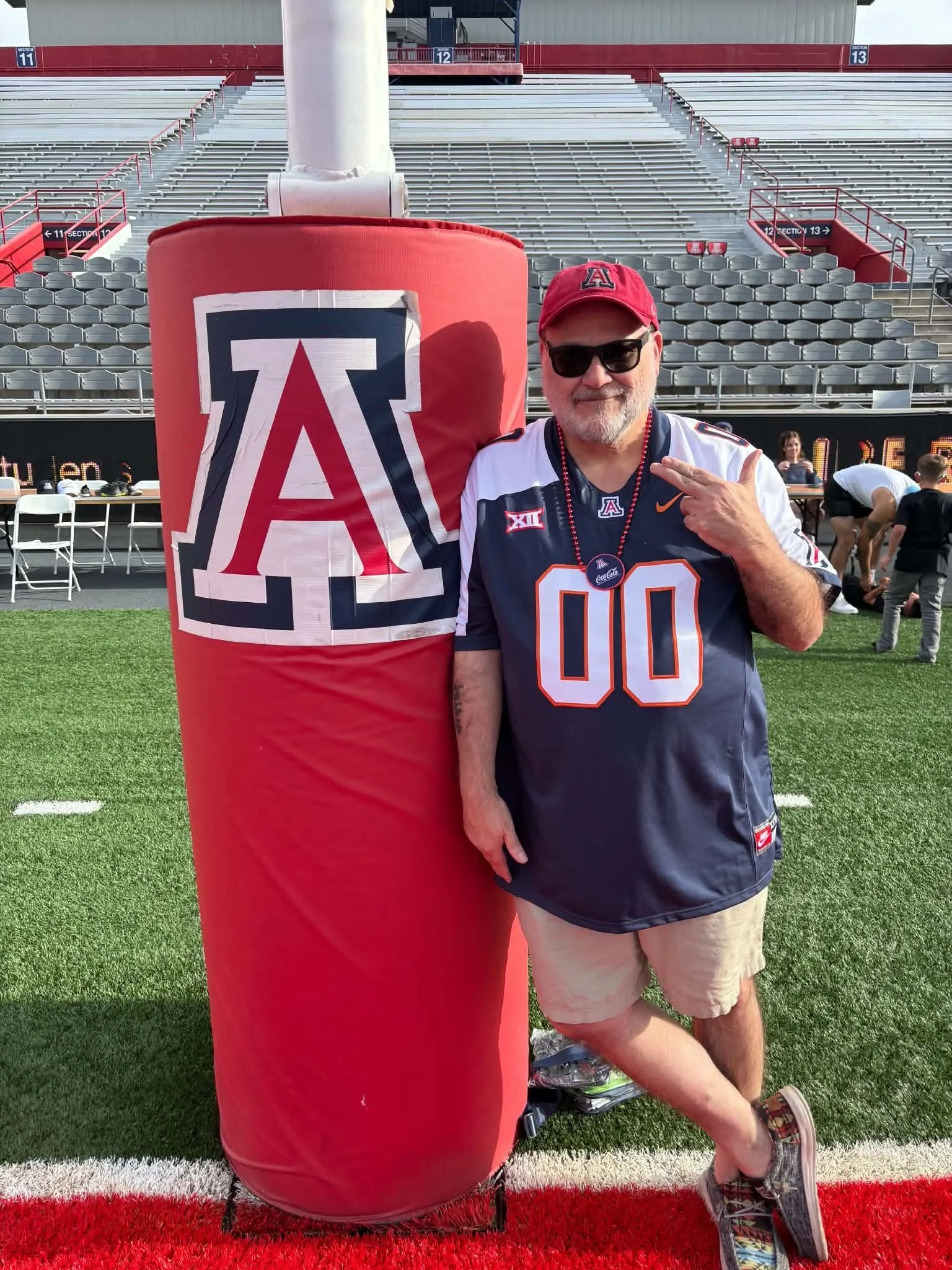
J. Rocky Colavito, aka Dr. Damned, aka The Breathing Trigger Warning, lives in the desert Southwest where the heat is dry and the javelina, bobcats, and coyotes roam occasionally through his neighborhood. On good days, an unkindness of ravens pays a visit, sometimes bearing shiny trinkets. He works in a cluttered space, filled with toys, books, curios, and things that he shouldn’t eat. From this space, he writes works in keeping with his brand All The Genres of The Dark. His work ranges from quiet and “safe” horror to extreme forays that have gotten him banned in certain business and in all likelihood made his former workplace very uneasy. He is the creator of Buck Neighkyd (porn star turned occult detective), a series of neo-giallo novels, another series best described as Cocaine Bear, but with cryptids, noir fiction set in the world of 1960’s beach party movies, and a raft of stories that appear in collections from Wicked Shadow Press, Alien Buddha Press, Twisted Dreams Press, The Butchered Writers, collections by Sidney Shiv, Judith Sonnet, and Kevin Kennedy, and, of course, WATG press. His stories also appear in a diverse set of magazines: Caveman, Carnage House, Werewolf Magazine, Schlock!, Dark Dossier (rip), and The Horror Zine (rip). With settings ranging from the rings and locker rooms of professional wrestling to infected swamps and bayous, Rocky is at home where ever his writing takes him. He is a former college English professor turned full time horror writer, and still proudly wears the mantle of the one they warned you about.
His epitaph will read: Somebody had to do it; damn glad it was me.